

He Just Said It: This Is What Recklessness Looks Like at the Presidential Level

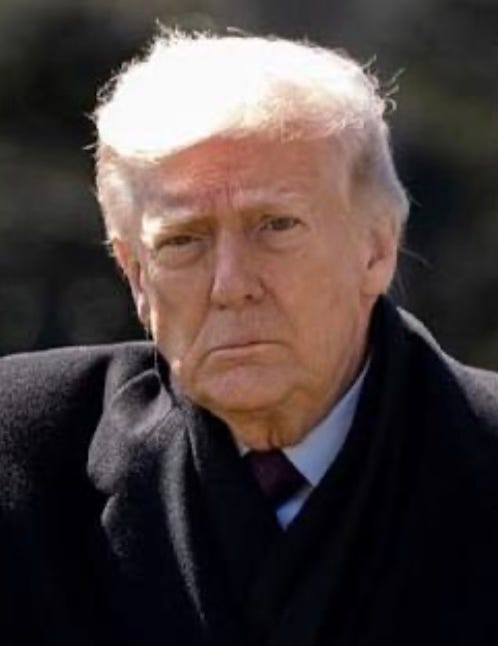
This Is What Recklessness Looks Like at the Presidential Level
The Jack Hopkins Now Newsletter #824: Saturday, March 21st, 2026
There are moments in geopolitics where strategy is unclear.
And then there are moments like this…
Where it’s not unclear at all.
It’s reckless.
Let’s strip this down to what just happened.
The President of the United States publicly threatened to “hit and obliterate” Iran’s power infrastructure if they don’t reopen a critical global shipping route within 48 hours.
At the same time, he admits:
Iran wants a deal… and he doesn’t.
And…then, almost casually…claims he’s already achieved his objectives “weeks ahead of schedule.”
That’s not strategy.
That’s improvisation at the level of global risk.
Oh, and it’s also Bat. Sh*t. Crazy.
This isn’t strength—it’s volatility
There’s a difference between pressure and unpredictability.
Pressure is calculated.
Unpredictability is dangerous.
And right now, what we’re seeing is a leader:
Escalating rhetoric
Rejecting negotiation
Compressing timelines
And threatening infrastructure strikes
All while a multi-front conflict is actively heating up.
Iran is firing missiles deep into Israel.
Some are getting through.
Civilian areas are being hit.
Mass casualty events are being declared.
At the same time…
Missiles are now being launched toward a joint US-UK base in the Indian Ocean.
Let that sink in.
We are now in a moment where:
Regional conflict is expanding
Western military assets are being targeted
And the US President is accelerating escalation instead of stabilizing it
This is how miscalculation happens
Not through one decision.
Through a pattern:
Overconfidence
Public ultimatums
Dismissal of negotiation
Belief that control is greater than it actually is
This is how leaders walk themselves into situations they can’t easily walk out of.
The economic fallout isn’t theoretical
Let’s talk about what this means practically.
Because this isn’t just about missiles.
It’s about the Strait of Hormuz.
Roughly 20% of the world’s oil supply moves through that corridor.
If that route is disrupted…even partially…you’re not looking at:
“some volatility”
You’re looking at:
Immediate oil price spikes
Supply chain shock
Increased transportation costs across the board
Inflation pressure returning hard and fast
And that hits:
Gas prices
Food costs
Goods and services
Small businesses
Household budgets
This is not abstract.
This lands directly on American citizens.
And here’s the part people underestimate
Markets don’t just react to events.
They react to leadership behavior.
When the person in charge signals:
Impulsiveness
Escalation without off-ramps
Rejection of negotiation
Markets price in risk of further instability.
That means:
Investment hesitation
Market volatility
Capital pulling back
Increased uncertainty premiums
In plain terms:
The cost of everything goes up… because confidence goes down.
The global response won’t stay contained
When a US President openly threatens to obliterate infrastructure in a volatile region…
Other actors don’t just watch.
They reposition.
Allies become uneasy.
Adversaries test boundaries.
Neutral players hedge.
And suddenly…
What was a regional conflict starts to carry global consequences.
This is the real problem
Not just the threat.
Not just the missiles.
Not just the escalation.
It’s the absence of visible control and discipline at the top.
Because in moments like this, the role of leadership is simple:
Slow things down
Create options
Maintain leverage
Avoid irreversible mistakes
Instead, what we’re seeing is acceleration.
And acceleration…under uncertainty is where damage happens
Economic damage.
Geopolitical damage.
Human damage.
Where this likely goes
If this trajectory holds, here’s what becomes increasingly likely:
Continued escalation cycles between Iran and Israel
Increased targeting of Western military assets
Disruption or threat to key shipping lanes
Energy market instability
Inflationary pressure returning in waves
Growing public frustration domestically as costs rise
And eventually…
Political backlash at home.
Because Americans don’t experience geopolitics as theory.
They experience it at the gas pump…at the grocery store…and in their monthly bills.
Final thought
This isn’t a moment for theatrics.
It’s a moment for precision.
And…when precision is replaced with impulsive escalation…
The consequences don’t stay overseas.
They come home.
Your move
Drop one word in the comments:
“Concerned”
“Watching”
“Uncertain”
“Prepared”
I want to see where you are right now.
#HoldFast
Back soon.
-Jack
Jack Hopkins
P.S. Most people will watch this unfold headline by headline…reacting after each new escalation.
But the real advantage comes from seeing the pattern early:
When leadership becomes unpredictable, risk doesn’t stay contained…it spreads.
And the people who understand that before the impact hits…
…are the ones who aren’t caught off guard when it does.
Extremely concerned
Concerned squared
Primarily about nuclear weapons in this Prez’ hands.