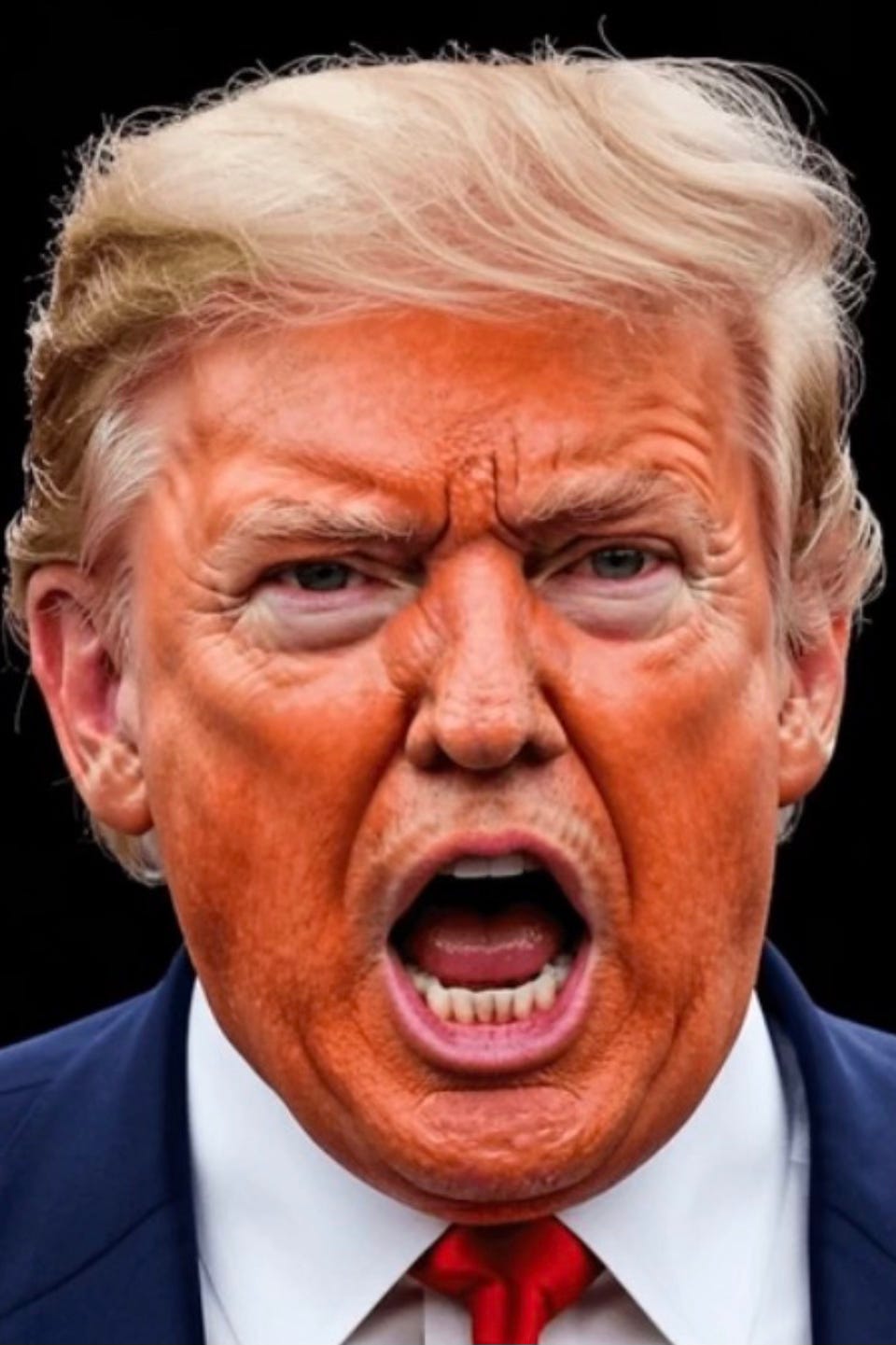
What Happens When a President Tries to Get Around “No”
The Most Revealing Part of Trump’s Tariff Meltdown: Part II
What Happens When a President Tries to Get Around “No”
The Most Revealing Part of Trump’s Tariff Meltdown: Part II
The Jack Hopkins Now Newsletter #788: Friday, February 20th, 2026 (Evening Follow-Up)
Earlier today, the Supreme Court told Donald Trump:
No.
Not procedurally.
Not symbolically.
Not as a suggestion.
No…as in: the Constitution put that power somewhere else.
And he responded the only way a man responds when he sees limits as insults.
Now we need to talk about what comes next.
Because court rulings do not end power struggles.
They redirect them.
When a Boundary Is Drawn
The Supreme Court did something simple today.
It said: you cannot use emergency authority to impose sweeping tariffs because the power to tax belongs to Congress.
That’s not dramatic.
That’s constitutional architecture.
But here’s the mistake people make:
They assume that when a boundary is drawn…behavior changes.
Sometimes it does.
Sometimes the boundary becomes the starting gun.
If you believe your authority is inherent…not delegated…then being fenced in doesn’t produce humility.
It produces workaround energy.
The Workaround Instinct
You saw it in real time this afternoon.
He didn’t absorb the loss.
He reframed it.
He said the ruling actually made his power “more clear.”
That’s not argument.
That’s psychology.
When someone cannot tolerate visible limits, they compensate.
And…in the presidency…compensation does not happen quietly.
It happens at scale.
So let’s walk through the ladder.
Not hypothetically.
Structurally.
Level One: The Legal Pivot
The cleanest move is a statutory pivot.
Find another trade statute.
Invoke different language.
Call it temporary.
Call it reciprocal.
Call it national security.
The mechanism changes.
The economic impact doesn’t.
If this works, he declares the Court irrelevant.
If it fails…escalation accelerates.
Watch for rapid executive order language in the next few days.
Watch for USTR announcements about “reciprocity mechanisms.”
That’s Level One.
Level Two: Quotas Instead of Tariffs
If you can’t tax imports, you can limit them.
Tariffs raise prices.
Quotas restrict supply.
And…supply shocks…are more destabilizing than price increases.
When imports are capped:
• Domestic producers can’t ramp instantly
• Inventory tightens
• Prices spike unpredictably
• Small businesses get squeezed first
Tariffs are visible.
Quotas are disruptive.
Politically, they can be framed as “protective.”
Economically, they introduce fragility.
And fragility…compounds.
Level Three: Export Controls
If imports become legally complicated, restrict exports instead.
Block certain American goods from leaving the country.
This looks aggressive.
It looks patriotic.
It often becomes self-sabotage.
Because once foreign buyers replace American suppliers…they rarely return at previous scale.
Market share lost through export controls isn’t easily reclaimed.
You don’t just hurt foreign competitors.
You teach them to operate without you.
That’s permanent.
Level Four: Administrative Pressure
Here’s where escalation becomes less visible.
You don’t need new laws.
You just need friction.
More inspections.
Slower ports.
Additional documentation.
Regulatory “review.”
Trade doesn’t stop.
It slows.
And slow…is expensive.
Delays ripple through supply chains.
Manufacturers miss deadlines.
Retailers pass along costs.
Consumers absorb the pressure.
It becomes a stealth tax….paid in time…instead of line items.
Small operators bleed first.
Large corporations adapt.
The public feels it without understanding why.
Level Five: Financial Leverage
If trade levers narrow, financial levers widen.
Signals to regulatory agencies.
Pressure on transaction approvals.
Targeted enforcement.
Capital markets do not require tariffs to panic.
They require unpredictability.
And…unpredictability has already entered the bloodstream.
Investment pauses before recessions appear in headlines.
The market doesn’t need certainty.
It needs confidence.
Confidence erodes faster than policy changes.
The Retaliation Spiral
Every one of these steps triggers response.
Other countries retaliate strategically.
Not emotionally.
They target politically sensitive sectors:
• Agriculture
• Aerospace
• Technology
• Energy
They apply pressure where domestic politics hurt most.
Escalation feeds escalation.
And…once that loop begins…it develops its own momentum.
At that point, the original Supreme Court ruling becomes irrelevant.
Now you’re in a trade conflict driven by pride…not policy.
Pause Here
If you’re reading this in the Substack app, hit Comment and answer this:
Which escalation path feels most likely in the next two weeks?
Visible aggression…
Or quiet administrative choke points?If you’re in email, tap “View in app.” This discussion matters.
The Psychology Beneath the Policy
This isn’t just trade mechanics.
It’s dominance psychology.
Earlier today, he reframed a loss as empowerment.
That tells you something essential.
When leaders cannot tolerate public limitation, they seek restoration elsewhere.
The presidency provides multiple arenas for that restoration:
Trade.
Immigration.
National security.
Executive orders.
If one arena closes…another opens.
The risk is not simply bad policy.
The risk is escalation driven by optics.
Why This Could Get Messier Than Tariffs
Tariffs are blunt instruments.
They’re controversial, but familiar.
Workarounds are less familiar.
And…less predictable.
Quotas create supply instability.
Export controls invite permanent market shifts.
Administrative friction destabilizes small business.
Financial pressure unnerves capital markets.
Each layer increases uncertainty.
Uncertainty is inflationary.
Uncertainty suppresses investment.
Uncertainty narrows growth.
And growth…absorbs shock.
When growth slows…shock magnifies.
Institutions as Brakes
Now the grounding.
Presidents do not act alone.
Executive actions move through:
• Agency lawyers
• Civil servants
• Federal courts
• Congress
• Markets
Each layer adds friction.
Friction is not weakness.
It is design.
The system was built with drag intentionally.
The real test now is not his impulse.
It is institutional absorption.
Do agencies implement aggressively?
Do courts intervene quickly?
Does Congress assert authority?
Do markets discipline volatility?
That’s what determines trajectory.
What to Watch (Next 7–10 Days)
Rapid executive orders invoking alternate trade authority
USTR language about “temporary reciprocal measures”
Increased customs enforcement directives
Foreign governments announcing coordinated responses
Volatility in logistics…agriculture…and manufacturing stocks
Treasury or Commerce signaling review of cross-border capital flows
If multiple signals align, escalation is underway.
If they stall, institutional friction is working.
The Broader Pattern
This was never just about tariffs.
It was about what happens when a president is told:
You don’t get to do that.
Some leaders recalibrate.
Some double down.
We saw the instinct this morning.
Now…we monitor the mechanism.
Orientation
Do not panic.
Do not minimize.
Observe.
Escalation in trade policy is rarely instantaneous.
It unfolds through steps.
We just mapped the steps.
The most dangerous moment isn’t the first workaround.
It’s the normalization of the second and third.
That’s when volatility…becomes background noise.
One Final Reality
If he cannot legally tax the world, he may attempt to strong-arm it.
But strong-arming the global economy does not isolate pain overseas.
It rebounds.
At checkout counters.
On payroll sheets.
Inside investment decisions.
That’s the structural truth.
The presidency is powerful.
But the global economy is interconnected.
Power applied recklessly…travels in circles.
Final In-App Action
If this escalation map clarifies what comes next for you…
Restack this.
Understanding the ladder before it’s climbed is how we stay calm while others
escalate.
#HoldFast
Back soon.
-Jack
Jack Hopkins
P.S. If you’re reading this, you’re early. Most people are still arguing about tariffs. You’re watching the psychology behind them. Stay sharp. Stay calm. Stay ahead.


Trump only knows visible aggression! He already started!
Screw college government classes.. just read Jack’s Substack.. I’ve learned more reading his Substack than 4 years of college and a couple of years of law school
