

“We Thought Someone Else Would Stop Him”
Holocaust survivors were asked the same question for decades.

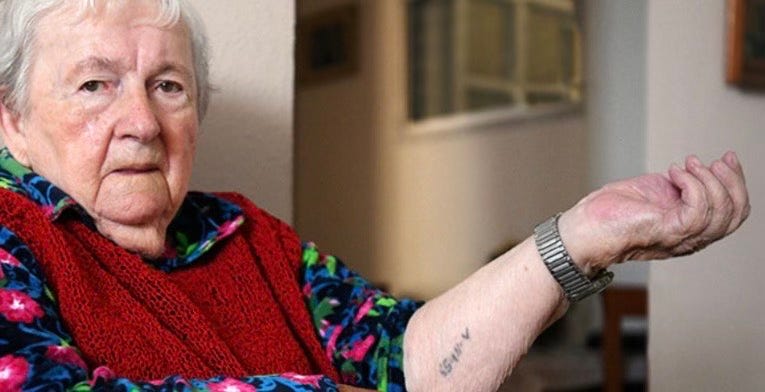
“We Thought Someone Else Would Stop Him”
Holocaust survivors were asked the same question for decades.
The Jack Hopkins Now Newsletter #764: Thursday, February 5th, 2026.
Again and again.
In classrooms.
In documentaries.
In private conversations that never made it into history books.
“What could have stopped Hitler?”
And what’s striking is this:
They didn’t talk first about armies.
They didn’t talk first about weapons.
They didn’t even talk first about elections.
They talked about ordinary people…and the small decisions that snowballed into catastrophe.
Not because they were trying to scare anyone.
But…because they were trying…desperately…to prevent history from repeating itself.
What follows is not theory.
It’s not hindsight punditry.
It’s a pattern survivors recognized while it was happening…and later understood too late.
1. “We waited for it to get bad enough.”
Survivors often said the most fatal mistake wasn’t support for Hitler.
It was delay.
People told themselves:
He’s loud…but he won’t really do it.
This is just rhetoric.
The system will restrain him.
Someone more powerful will intervene.
Each step felt tolerable…on its own.
A new law here.
A new exception there.
A newspaper shut down.
A judge replaced.
A group singled out “temporarily.”
No single moment felt like the end of democracy.
Until it was already gone.
Survivors were blunt about this:
Authoritarianism doesn’t arrive as a single shock.
It arrives…as a series of postponed reactions.
They believed that if people had acted when the first lines were crossed…when opposition was merely punished…not yet exterminated…history could have bent differently.
2. “We underestimated how fast normal could change.”
One of the most chilling survivor reflections is how quickly the abnormal became routine.
What shocked people in January became boring by June.
What felt outrageous one year became policy the next.
The lesson survivors emphasized:
Never judge danger by how familiar it feels.
Humans adapt faster than institutions.
Faster than laws.
Faster than moral outrage.
And once cruelty is normalized, resistance feels disruptive…even rude.
People stop asking, “Is this right?”
They start asking, “Is this worth the trouble?”
Survivors believed this mental shift…comfort with gradual injustice…was one of the most preventable failures.
Not because people were evil.
But because they were tired…busy…afraid…and hopeful that it would stop on its own.
It never does.
3. “We trusted respectable people to draw the line.”
This one comes up constantly…and it’s deeply uncomfortable.
Survivors recalled believing that elite institutions would step in:
Courts
Military leadership
Business leaders
Clergy
Foreign allies
Surely someone with authority would say, “Enough.”
But here’s what actually happened:
Many elites adapted instead of resisting.
Some because they agreed.
Some because they benefited.
Some because they believed cooperation would soften the blow.
Some because they feared becoming the next target.
Survivors later said the most dangerous myth was believing that respectability equals resistance.
Authoritarian movements don’t need unanimous support.
They only need silence from those with power.
And silence…they learned…is far easier to obtain than people think.
4. “We didn’t protect the out-groups when it was still safe to.”
This is one survivors spoke about with visible regret.
Early persecution didn’t target everyone.
It targeted someone else.
A minority.
A political faction.
A scapegoat labeled as dangerous…immoral…or disloyal.
Many people rationalized:
I don’t agree with it, but it doesn’t affect me.
They brought some of this on themselves.
I don’t want trouble.
Survivors said this was the moment where intervention was still possible.
Because authoritarian systems expand outward.
They never stop with the first target.
The refusal to defend others early…created a society where…later…no one was left to defend anyone at all.
Solidarity delayed…is solidarity denied.
5. “We mistook legality for morality.”
One of the most haunting survivor observations was this:
“Once it was legal, people stopped questioning it.”
Laws were changed.
Courts were restructured.
Emergency powers were normalized.
Everything was done through process.
This gave ordinary people psychological cover.
If it’s legal…it must be acceptable.
If it’s official…it must be justified.
If it’s written down…it must be right.
Survivors warned that legality…is one of the most powerful anesthetics in human behavior.
Atrocities don’t begin as crimes.
They begin as redefined norms.
By the time laws catch up to morality…morality is already on life support.
6. “We thought fear was weakness. It wasn’t.”
Many survivors admitted something hard to say out loud:
People weren’t ignorant.
They were afraid.
Afraid of losing jobs.
Afraid of losing status.
Afraid of surveillance.
Afraid of being singled out.
Authoritarian movements weaponize fear gradually.
First, consequences are social.
Then economic.
Then legal.
Then…physical.
Survivors said earlier collective resistance…before fear became individualized…could have changed the calculus.
Fear thrives in isolation.
It weakens in numbers.
Waiting until fear is fully justified…is waiting too long.
7. “We believed it couldn’t happen here.”
This may be the most repeated survivor warning of all.
Germany wasn’t considered fragile.
It was educated.
Industrialized.
Culturally rich.
Legally sophisticated.
People believed modernity was protection.
Survivors learned the opposite:
Modern systems don’t prevent authoritarianism.
They accelerate it once captured.
Efficiency helps whoever controls the levers.
The belief in exceptionalism…our country is different…was one of the most paralyzing illusions.
History doesn’t repeat because places are the same.
It repeats…because people are.
The Pattern They Wanted Us to See
Survivors didn’t speak in abstractions.
They spoke in regrets.
Not “we didn’t know.”
But “we knew…and waited.”
They believed Hitler’s rise depended less on fanaticism…than on hesitation.
Less on monsters…than on ordinary people delaying uncomfortable action.
The tragedy wasn’t ignorance.
It was normalization.
Accommodation.
Silence.
Hope that someone else would intervene.
They didn’t ask future generations to panic.
They asked them to act earlier than feels necessary.
Because by the time it feels necessary…
…it’s often already too late.
Final Thought
Holocaust survivors weren’t obsessed with the past.
They were obsessed with the future.
They told these stories not to assign guilt…but to leave a map.
A map that shows where people turned back.
Where they paused.
Where they waited.
Where they assumed safety would last.
They believed the derailment of authoritarianism…doesn’t happen at the peak.
It happens quietly.
Early.
When resistance still feels awkward.
When consequences still seem avoidable.
When courage still feels optional.
That’s the window…they begged us not to miss again.
If you read this far, I know three things about you:
You give a damn.
You’re not asleep.
And you don’t want to be the person who “saw it coming” and did nothing.
So here’s what I’m asking…simple, specific, and fast:
Restack this and add this exact line:
“The time to act is NOW. Not later. NOW.”Share it everywhere you still have oxygen: X, Facebook, Threads, Instagram, Bluesky, your group chats, your email list…with the same line:
“The time to act is NOW. Not later. NOW.”
Because this is how momentum gets built before the window closes:
not through outrage… through distribution.
Do those two things, and you’re not just reading.
You’re participating.
#HoldFast
Back soon.
-Jack
Jack Hopkins
P.S. I was going to put the follow-up (that will be coming later this evening or tomorrow) behind the paywall; it’s called “Why ‘Just Vote’ Was Never Enough.”
Not because voting doesn’t matter. It does.
But…history is brutally consistent on this point: elections alone have never stopped an authoritarian takeover.
And because I don’t want this insight trapped on the other side of a checkout screen, I’m publishing it for everyone. There will be no paywall.
In it, I lay out what actually mattered…the moves that slowed…stalled…or derailed power grabs while there was still time.
Be watching.
Jack- your words hit me hard today. I’m already asking myself: have I done enough? have I made a difference ? will it be sustained?
I’m done trying to change others’ behavior by talking to them. I’ve concluded my best course of action is modeling the right behavior.
When you substitute Trump for Hitler and the United States for Germany, then read the article again you will experience a true "holy shit" moment.