The “Stench” Is the Point: Why This All Looks Like a Setup
The Jack Hopkins Now Newsletter #768: February 9th, 2026.
What you’re watching right now isn’t “messy government.” It’s a manufactured atmosphere—one part fear, one part confusion, one part spectacle—kept intentionally rancid so the public starts begging for any solution that promises relief.
When the air is foul enough, people stop asking, “Is this legitimate?” and start asking, “How fast can you make it stop?” And that’s the point: create conditions where accountability feels like an inconvenience, oversight feels like sabotage, and power grabs feel like ventilation.
Not staged as in “actors, fake blood.”
Staged as in “designed environments.”
A political room where the air is kept intentionally rancid so you’ll accept any ventilation system they install—even if it locks from the outside.
On February 9, 2026, the through-line is hard to miss:
Congress is staring at a DHS funding cliff with Democrats demanding guardrails on ICE/CBP conduct after fatal shootings of two U.S. citizens in Minneapolis and allegations of masked agents, raids, and brutality.
New reporting shows the “worst of the worst” narrative doesn’t match the numbers: fewer than 14% of nearly 400,000 ICE arrests in the first year back involve violent-crime charges/convictions.
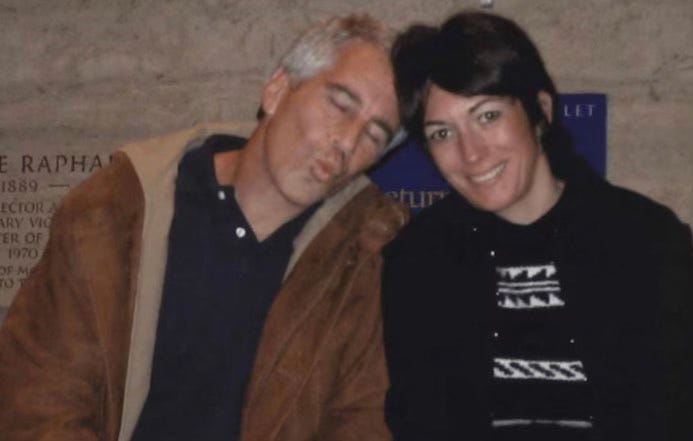
Ghislaine Maxwell invokes the Fifth—and her lawyer floats a theme that should chill you: she’ll “speak” if she gets clemency.
And then, right on schedule, the cultural/political noise machine screams about spectacle—sports, celebrities, insults—while the actual machinery of power keeps moving.
This doesn’t read like random chaos.
It reads like a system.
1) When the policy is indefensible, manufacture a “moral atmosphere”
The trick isn’t to convince the country that every ICE raid is righteous.
The trick is to flood the room with enough threat language that people start thinking in only two categories:
“Do nothing and die.”
“Do something—anything—right now.”
That’s why the “worst of the worst” claim matters so much. Because when the data shows most arrests are not violent-crime cases, the moral justification collapses.
So what happens next in a power system like this?
You don’t quietly adjust policy.
You tighten the story and broaden the powers.
And if lawmakers try to put guardrails on enforcement—warrants, no masks, clearer identification—you frame it as helping criminals and tying hands.
That’s the setup: make oversight feel like sabotage.
2) The DHS shutdown cliff is leverage—on purpose
Read the DHS funding standoff like a hostage note.
DHS isn’t just ICE. It’s TSA. FEMA. Critical infrastructure. The stuff people panic about when it’s threatened.
So if DHS funding is about to lapse, and one side is demanding limits on enforcement conduct, the other side has a powerful message:
“Give us what we want, or you’re the reason the country’s safety apparatus is ‘shut down.’”
That’s not a bug. That’s the pressure mechanism.
And it pairs perfectly with the “stench” you mentioned—because a public in a fear state will accept ugly tradeoffs fast.
3) “Masks + raids + force” isn’t just tactics—it’s psychological architecture
When agents hide identity and accountability gets blurry, you don’t just increase operational latitude.
You create uncertainty.
And uncertainty is an accelerant: it spreads rumors, spikes anxiety, and makes communities feel like they’re living under a force that can’t be named or challenged.
That’s why the Democratic demands described—judicial warrants, no masks—are so specifically targeted at legitimacy.
And that’s also why the pushback is so aggressive.
Because legitimacy is the one thing that—once restored—makes the whole “emergency” posture harder to sustain.
4) The Maxwell “clemency for testimony” vibe is a warning flare
Even if you ignore everything else, this part is telling.
Maxwell invokes the Fifth. Survivors warn lawmakers not to let the process become another form of harm.
Then her lawyer effectively says: she’ll talk if she gets clemency.
That is not a normal public-service posture. That is a transactional, power-protection posture.
And it fits a familiar setup:
Tease “big truths”
Dangle “exclusive access”
Turn accountability into bargaining
Smear anyone who demands transparency as partisan or “obsessed”
It’s not just ugly. It’s strategically useful—because it keeps the public chasing a sensational trail while institutional fights over enforcement power proceed with less oxygen.
5) The culture-war decoy is not separate from the crackdown—it’s cover for it
Look at how easily the national conversation can be dragged from “Do masked federal agents need warrants?” to “What did a pop star do at halftime?”
That isn’t accidental. It’s the point of a decoy: it doesn’t have to persuade you—it only has to occupy you.
Even the Olympics angle reflects the same dynamic: international discomfort, athletes voicing unease, and the president choosing public conflict.
That’s not leadership. That’s attention control.
And attention control is how you run controversial policy at speed.
Pause here—quick in-app check
If you’re reading this on Substack, drop a comment with one line:
What feels like the “setup” to you—distraction, pretext, or intimidation?
(You’ll help other readers name what they’re seeing in real time.)
So why is it likely these are “setups”?
Because the pieces interlock too cleanly:
A) The narrative and the numbers don’t match
If the public is told the operation is narrowly aimed at violent threats, but the data shows otherwise, the system must choose:
Admit it, narrow it, legitimize it
orDouble down, broaden authority, discredit critics
The reporting that only 13.9–14% of arrests involve violent-crime charges/convictions is exactly the kind of fact that forces that choice.
B) The “emergency” is being used to demand exemption from normal limits
Warrants. Identification. Oversight.
Those aren’t radical asks in a democracy. Those are guardrails.
When those guardrails are framed as impossible “non-starters,” it’s a tell: the goal is freedom from constraint, not just “public safety.”
C) The system benefits from maximum confusion
Confusion fractures coalitions.
It makes moderate people say, “I don’t know what’s true,” and check out.
It makes activists burn out.
It makes everyone easier to move.
That’s why the environment stays stinky. If the air ever clears, people start asking calmer questions—questions that require answers, not slogans.
What to watch next (because this is where setups usually go)
Based on the pattern visible in the February 9 coverage, here are the likely next moves:
A sharpened “criminality” narrative (even if the data keeps disagreeing).
A “Democrats shut down DHS” blame campaign if negotiations fail—because shutdown framing is leverage.
More spectacle warfare (sports, celebrity, insults) timed around key policy inflection points.
Transactional “truth” bargaining (Maxwell-style: “I’ll talk if I’m rewarded”), which keeps accountability permanently for sale.
None of this requires conspiratorial thinking.
It requires pattern recognition.
Because in modern power politics, the “setup” is often simple:
Create conditions that make the public beg for the very tools that remove their ability to object later.
That’s why it smells the way it smells.
Not because it’s sloppy.
Because it’s functional.
End with one action:
Drop a comment with the single most suspicious tell you’ve noticed in the last two weeks—the exact moment this stopped feeling like governance and started feeling like conditioning. I’m serious: one sentence is enough.
Because if we collect those tells in one place, the comments stop being “reactions” and start becoming a living map of what’s happening in real time—my early-warning system, and yours.
#HoldFast
Back soon.
-Jack
Jack Hopkins
P.S. If you’re still reading, you already know why this matters: legacy media is hanging on by a thread…financially…structurally…and psychologically.
When institutions are this fragile…they don’t just “make mistakes.” They avoid risk. They smooth edges. They outsource curiosity to official statements. They treat controversy like a virus.
And the public is left with the weirdest outcome of all: a world full of scandals…and fewer journalists willing to interrogate them like adults.
What you’re paying for here isn’t outrage. It’s the thing you were supposed to get from the old system: patient orientation…hard questions…clean standards of proof… and the willingness to walk into topics other outlets tiptoe around…without turning your brain into a bonfire.
If you value that…if you want reporting and analysis that doesn’t flinch…doesn’t do “move on,” and doesn’t trade rigor for comfort…support independent writers. It’s not a luxury anymore. It’s where the questions went.
P.P.S. A while back, a woman messaged me something I’ve never forgotten. She said she couldn’t quite explain it, but she liked that my writing never behaves—bold, punctuation, font size, rhythm… none of it “standard”… and for that matter, it doesn’t even follow a consistent pattern from one newsletter to the next. She admitted she didn’t know why that mattered to her… but she could feel that it did.
So you probably had a pretty profound “Wait—WHAT?” today… because I did the unthinkable: I wrote this one (the main article) in a more standard, buttoned-up way—at least in the punctuation department.
Here’s what that’s about.
I figured out a long time ago—long before I ever saw research that backed it up—that in both the written word and the spoken word, there’s real magic in breaking what the brain expects.
The mind is a pattern machine. It predicts. It auto-fills. It skims. And the moment it thinks it knows what’s coming next, it stops paying full attention.
But when you interrupt the pattern—when you zig where the brain expects a zag—it snaps the reader awake. The sentence gets stickier. The point lands harder. The impression lasts longer.
Sometimes that means breaking the “rules.”
And sometimes—like today—it means breaking my rules.
You might say I’ve long been obsessed with making my communication as sticky as possible…because…I have.
Resources I used for this piece
The “expectation-break → sticky” research (writing + memory)
Distinctiveness / Isolation Effect (Von Restorff Effect) — why the “odd one out” gets remembered.
Prediction error updates memory (hippocampus) — surprise interrupts expectations and makes memories more malleable/updatable.
Expectation violation strengthens source memory — unexpected events can reduce “source amnesia” and improve short-term source memory.
Surprisal & reading time — less predictable language reliably increases processing time (attention cost), measurable in reading datasets.
Schema incongruence and memory — review-level discussion of when incongruent information is remembered better (and when it isn’t).
Expectation-violating concepts — experimental work on how violations of expectation shape what sticks in memory.
Reporting/resources for the main article’s factual spine (DHS/ICE/Minneapolis/Maxwell)
PBS NewsHour — Democrats’ ICE accountability demands (masks, cameras, judicial warrants) tied to the DHS funding fight.
ABC News — explainer on the congressional fight over ICE restrictions and shutdown dynamics.
CBS News — what a DHS shutdown would (and wouldn’t) change for ICE/CBP operations.
GovExec / States Newsroom — details on proposed ICE constraints (body cameras, mask removal, detention-location limits).
ABC News Minneapolis live updates — context on the Minneapolis shootings and the federal “draw down” messaging.
AP — Maxwell invoking the Fifth + clemency-for-testimony framing.
Washington Post — Maxwell deposition details and the clemency condition as described by her attorney.


it makes absolutely no sense for her to testify. shes a certified liar trying to get a pardon from Trump. lock her back up, ignore and leave her there to rot.
Trump has said he should nationalize voting, get rid of mail-in ballots and essentially cancel John Lewis's voting act. The "stench" is he will lie, cheat and steal the midterms. This is not a drill.
