Discussion about this post

User's avatar
HKJANE's avatar

Jack is correct that the framework he’s identified has a name in the intelligence community — they call it signature behavior. File the date it appears in this form: June 2026, a moment when two separate but structurally identical questions are being asked simultaneously, one about Iranian nuclear assets and one about the domestic architecture of American power.

When a state moves to secure an asset against seizure rather than destruction, it reveals something it would never declare publicly. You don’t mine your own territory against an airstrike. You mine it against a ground operation, a special forces seizure attempt, a combined-arms extraction. The defensive measure is a confession about what the offensive measure was believed to be. This is the intelligence analyst’s first principle: watch what they protect, not what they say. Operational decisions are driven by survival calculus. And survival calculus, unlike press statements, is almost always honest.

Note which assets this administration has surrounded with equivalent protection. The Justice Department, restructured around the president’s personal defense attorney. The Epstein files, sealed by the man now nominated to be attorney general, who vowed publicly that no further releases would occur. The pardon power, deployed not toward mercy but toward those who acted in the president’s name. The inspector general system, dismantled before it could function. Each of these moves follows the same logic Iran’s decision-makers followed: identify what cannot be lost, and place the mines around it.

Jack’s Crown Jewels Principle is sound intelligence doctrine. What makes it more than an analytical framework — what makes it urgent — is that it applies with equal force to the domestic theater. State actors lie constantly at the declaratory level. They almost never lie at the operational level, not because they’re honest, but because when survival is the question, messaging becomes secondary to protection. Watch the defensive perimeter. The shape of it tells you what’s inside.

File this pattern as well. During World War II, governments moved gold. During the Cold War, both superpowers spent staggering resources protecting nuclear command-and-control — not because those systems were visible or glamorous, but because they were essential. The protection was proportional to the indispensability. That ratio is a diagnostic tool. Apply it to what you are watching now.

What this administration has treated as indispensable — the asset it has reorganized around, accepted extraordinary political cost to defend, and moved with increasing urgency to protect as pressure has mounted — is not a policy position. It is not an electoral coalition. It is not even an ideology.

It is impunity.

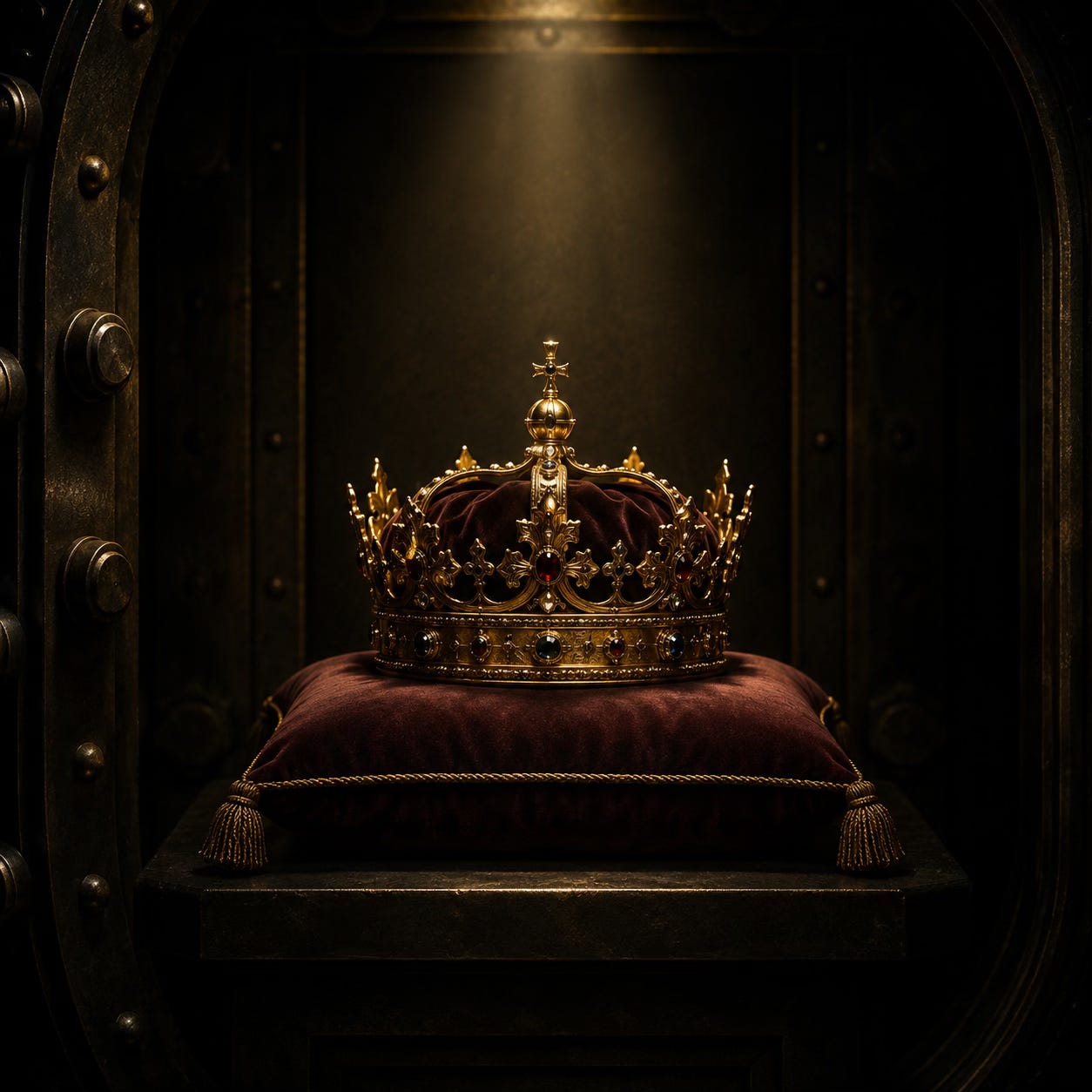
That is the enriched material at the center of the defensive perimeter. Everything else has been treated as dispensable infrastructure — courts, inspectors general, independent prosecutors, the historical record itself. Impunity is what gets the mines placed around it. Impunity is the crown jewel.

Jack asks the right operational question: what are they protecting? The historian’s companion question is: what does the act of protection itself reveal about what they fear? These are not separate inquiries. They converge on the same answer, approached from different directions — one from the present forward, one from the past backward.

The reader is now in possession of the framework and the evidence. The conclusion it generates is not one that requires stating. It is one that requires watching — carefully, consistently, and without the distraction of any single headline.

Because as Jack notes, headlines expire. The pattern does not.

#HOLDFAST

Susan's avatar

Thank you, Jack. I’ll keep looking for patterns. I’m far from an expert at it but getting a bit better thanks to you.

Also, I’ll reread this tomorrow.. Uh.. later today because it’s 5:00 am and I was engrossed in a fiction novel when I noticed you’d dropped this. I have to finish a chapter before I sleep.. 10 minutes. Maybe 15.. or I won’t sleep at all. Better than going to bed with Stephen Miller and Russell Vought occupying my brain, right?

#Holdfast

~Susan

No posts

Ready for more?
