The Most Dangerous Date on the Calendar Isn’t Election Day
It’s September 30th. And almost nobody is talking about it.
The Most Dangerous Date on the Calendar Isn’t Election Day
It’s September 30th. And almost nobody is talking about it.
The Jack Hopkins Now Newsletter #954: Thursday, July 2nd, 2026
Sit down. Pour yourself a cup of coffee. Because I’m about to tell you something that the smartest people in Washington already know...
...and most of the country hasn’t heard a whisper about.
Here it is:
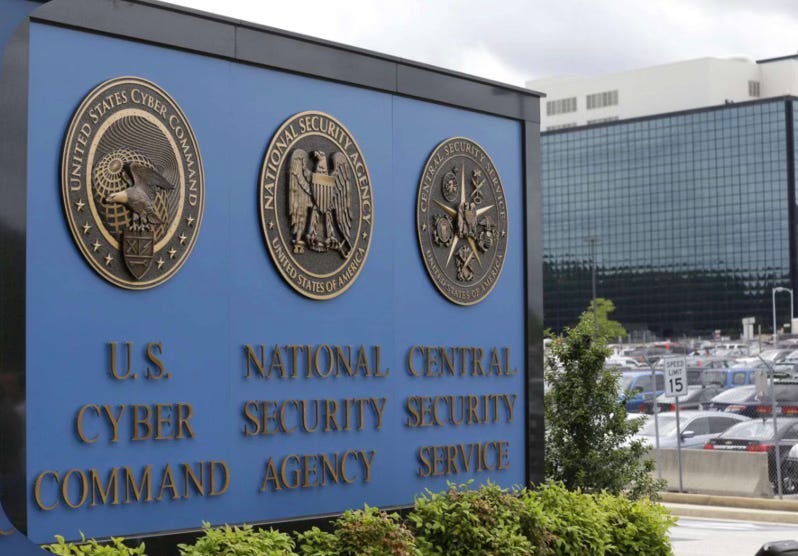
The man who runs both U.S. Cyber Command and the National Security Agency… the guy whose literal job is to see this stuff coming…sat in front of the United States Senate this spring and said it is reasonable to expect foreign adversaries will try to interfere in the midterm elections.
Read that again.
Not “possible.” Not “we’re monitoring the situation.” Reasonable to expect.
In government-speak, that’s about as close to a fire alarm as you will ever hear.
Now Here’s The Part That Should Make You Spit Out Your Coffee
You’d think…with the top cyber warrior in America saying the bad guys are coming… that we’d be tightening every bolt on the machine.
You’d think that.
Instead, a law almost nobody outside the industry has ever heard of is quietly running out of gas.
It’s called the Cybersecurity Information Sharing Act. Passed back in 2015. Boring name. Critical job.
Here’s what it does, in plain English:
When a cybersecurity firm or an election technology vendor spots something nasty crawling around in a network…a probe, an intrusion attempt, a new piece of malware ….this law lets them share that threat information…with the federal government and with each other…fast…without a platoon of lawyers slowing everything down.
It’s the neighborhood watch of American cybersecurity. Somebody sees a prowler on one street, every house on the block gets the description.
And it expires on September 30, 2026.
Go look at a calendar.
That is roughly five weeks before Election Day.
The exact moment when election offices…vendors…and security teams need to be swapping threat intelligence at maximum speed... is the exact moment the legal plumbing that makes it easy could get shut off.
It already lapsed once…last fall…while Congress argued. They patched it. Twice. The current patch runs out September 30th.
Why This Matters To You (Yes, You)
Maybe you’re thinking: “I’m not an election official. I don’t run a cybersecurity company. Why should I care?”
Fair question. Here’s the answer.
Foreign interference operations don’t usually work by flipping votes. That’s Hollywood stuff. The real game…the one the professionals worry about…is simpler and nastier:
Make you doubt.
Knock a results-reporting website offline for two hours on election night. Push a fake video of a “hacked” voting machine. Phish a county clerk’s email and leak something out of context.
None of that changes a single ballot. All of it changes what people believe about the ballots.
And the antidote…the boring…unglamorous antidote…is fast information sharing. Somebody spots the attack…everybody gets warned…officials respond in hours instead of weeks…and the rumor dies before it metastasizes.
That’s the machinery with an expiration date stamped on it.
The Good News (Because There Is Some)
Now, before you crawl under your desk, let me tell you what the doom-scrollers won’t:
The 2024 election faced cyber probes…hoax bomb threats…and full-blown foreign influence campaigns…and it held. No foreign operation changed an outcome.
The people who run elections in this country…in red counties and blue counties alike… are some of the most stress-tested public servants alive.
The system is not fragile. But…it is not self-maintaining…either. It holds because thousands of people do unglamorous work on time.
The clock I’m pointing at is part of that work.
So Here’s What I Want You To Do
Three things. Takes ten minutes. Costs you nothing.
One.
Remember the date: September 30, 2026. When you see headlines about “CISA 2015 reauthorization,” you’ll know what’s actually at stake. Most people won’t.
Two.
Bookmark your state and county election office websites now…the official ones. When the garbage starts flying in October (and it will), you’ll have your source of truth already in your pocket.
Three.
If you’re the type who calls your representatives…and you should be…this is a genuinely bipartisan ask. Security professionals…business groups…and election vendors across the spectrum want this law renewed. It’s not a red issue or a blue issue. It’s a “keep the neighborhood watch running” issue.
That’s it. That’s the whole pitch.
No panic. No conspiracy theories. Just a calendar…a countdown…and a country that works best when its citizens actually know what time it is.
#HoldFast
Back soon.
-Jack
Jack Hopkins
P.S. The generals told the Senate the adversaries are coming. The law that helps us see them coming expires five weeks before the vote. If somebody wrote that as a movie script…the studio would reject it as too on-the-nose. It’s not a script. Set a reminder for September 30th.
Sources
Nextgov/FCW — “Federal drawdown of election support ‘destroyed’ ongoing relationships, experts say” (April 29, 2026). Covers the testimony by Gen. Josh Rudd, director of U.S. Cyber Command and the NSA, that it is “reasonable to expect” foreign adversaries will seek to interfere in the midterms, plus the House Homeland Security Committee hearing on CISA’s drawdown.
Center for Democracy and Technology — “Countdown to the Midterms: Mapping the Rapid Evolution of Election Security” (February 2026). Details the Cybersecurity Information Sharing Act of 2015’s lapse last fall, its two short-term reauthorizations, the current September 30, 2026 expiration date, and the cuts to CISA and the EI-ISAC.
Office of Sen. Mark R. Warner — “Ahead of Midterm Elections, Warner Presses DHS on Reports that CISA is Failing to Provide Election Security Support” (May 2026). Senate Intelligence Committee letter to DHS citing the Cyber Command/NSA testimony and reduced federal election security support.
Nextgov/FCW — “Senator warns CISA election security pullback could leave midterms vulnerable” (May 2026). Reporting on the FY27 budget proposal to eliminate CISA’s election security program funding.
Votebeat — “Election officials say trust with CISA on election security is broken” (January 2026). State and local officials on the loss of federal support and the EI-ISAC’s shift to a membership model ahead of the midterms.


I emailed the following to Sens. Wyden + Merkley, + Rep. Dexter. As usual , Wyden's email box is full:
Please do all you can to get the Cybersecurity Information Sharing Act (CISA 2015) reauthorization passed before it expires on September 30th. Security professionals…business groups…and election vendors across the spectrum want this law renewed.
It is critical to have it in place for the midterm elections.
JFC had no idea.. but now I know. Thank you Jack for all the daily info.. I was blind but now I see🙌🏽🤙🏽🙌🏽
