Iran: This Is What It Looks Like Right Before a Strike
Trump, Iran, and the unmistakable signals that precede military action
Iran: This Is What It Looks Like Right Before a Strike
Trump, Iran, and the unmistakable signals that precede military action
The Jack Hopkins Now Newsletter #731: Tuesday, January 13th, 2026
Let’s start with one hard, unvarnished truth:
When the U.S. tells its citizens to get out of a country, and to “leave now,” that’s not routine travel advisory language. It’s a red alert.
Not a suggestion.
Not a hypothetical.
A red alert.
And when you combine that with the most aggressive rhetoric from a U.S. president in decades — rhetoric that openly leaves military options on the table — you’ve got to take it seriously.
Because the question we’re really asking is this:
Is Donald Trump preparing to attack Iran?
Not might he.
Not “is he bluffing?”
But is it a serious possibility in the coming days or weeks?
And the answer…based on everything we know…right now…is this:
Yes. There is a real, high-risk possibility that President Trump could order military action against Iran.
Not 5% risk.
Not 10%.
We’re talking a meaningful chance…a number that’s high enough for policymakers… investors…citizens…and global leaders to pay attention.
Here’s why.
(1) The U.S. Has Already Told Americans to Get Out of Iran -That’s Major
The U.S. State Department currently classifies Iran under a Level 4 “Do Not Travel” advisory…the highest possible warning.
That includes:
Civil unrest
Terrorism
Kidnapping
Arbitrary detention
No U.S. embassy on the ground
Significant danger to Americans in Country
In effect, the advisories say:
If you are in Iran, you need to leave now.
That’s not language used for Baghdad…Ankara…or even Kabul at times of tension. It’s reserved for places where the U.S. government believes something bad could happen to Americans very soon.
That alone…should catch your attention.
(2) Trump Has Put Military Options Explicitly “On the Table”
Look at the language coming out of the White House:
Trump’s press team has said he is “unafraid to use military force” against Iran if necessary…while saying diplomacy is preferable.
Trump himself said the U.S. may have to act before planned negotiations take place because of potential further violence.
That’s not ambiguous. That’s not subtle.
That’s the president explicitly acknowledging military options as part of the policy mix.
And that is extremely rare.
Even presidents who enter wars later hide that fact rhetorically…until the moment of decision. Trump is openly saying it…before any formal action has been ordered.
And…here’s the thing:
War is never a binary “off/on” event.
It’s a series of escalations…each one nudging you closer.
The rhetoric we’re hearing isn’t accidental…it’s positioning.
(3) This Is Not a Vacuum-The Region Is Already Volatile
Iran is not stable right now.
Protests have erupted across all 31 provinces…with violent crackdowns and hundreds… possibly thousands…dead.
Iran’s own leadership says it’s ready for war…but also open to negotiations.
That’s a classic signal of internal tension and external threat.
And while the Iranian government insists it has things under control, the unrest is serious, nationwide, and unpredictable.
That adds a dangerous element:
Governments in crisis often lash out at external enemies to deflect attention internally.
They make reckless choices when they feel their grip is slipping.
They over-read foreign threats as part of their own political narrative.
Put bluntly:
Iran may be pushing back…and Trump may read that as justification for action.
And that’s when things spiral.
(4) Trump’s New Tariff Announcement Isn’t Just Trade Policy-It’s Escalation
On January 12, 2026, Trump announced a 25% tariff on any country doing business with Iran, effective immediately.
That’s wild for two reasons:
The announcement was outside of any formal foreign policy framework.
There was no legal text…no published executive order…just a social-media post.
That’s more than posturing. That’s economic coercion.
You don’t punish global partners with tariffs unless you intend to squeeze your real target:
Iran’s economy.
And a president squeezing an adversary’s economy…while talking about military options…is a president actively preparing to stack pressures in all directions.
This is not diplomacy 101.
This is pressure cooker diplomacy.
(5) There’s Historical Precedent for Sudden Action
If you step back and look at Trump’s history as president, one thing stands out:
He announces decisions once they are already made.
Examples:
Soleimani strike in 2020 was revealed after the order was executed.
Strikes on Iranian nuclear sites in 2025 were confirmed only after the bombs hit.
That pattern suggests…strongly…that if Trump is planning military action…he won’t necessarily signal that decision before it happens.
He’ll signal intent…like now…and then act.
That’s the hard-nosed…realpolitik interpretation of what’s happening.
(6) This Isn’t Just Theory-Trump Is Already Being Taken Seriously by Military Analysts
Retired generals and strategic analysts aren’t dismissing the threats.
On one major news network, a senior retired general said that Iran’s leadership should take Trump’s threats seriously given recent history and current rhetoric.
That’s noteworthy.
Military strategists don’t throw that language around unless they see:
credible intent
a flow of policy signals
genuine alignment between rhetoric and capability
And Trump has both capability and a political incentive to escalate.
(7) Negotiations Are Happening-But Trump May Use Them as Leverage
Iran has expressed openness to negotiations with the U.S. government…even as both sides postured militarily.
That’s important.
It means:
Diplomacy has not been abandoned.
Iran’s leaders are not completely isolated.
There is a possible peaceful path.
But here’s the twist:
Trump himself publicly said the U.S. might act before those negotiations take place.
That’s not negotiation.
That’s brinkmanship.
He’s basically saying:
“We’ll talk, but not if circumstances make that inconvenient for us.”
That’s the language of escalation…not de-escalation.
(8) Why Trump Might Be Preparing to Act-Real Incentives
Let’s strip away the propaganda and get to the naked incentives.
Trump, always intensely political…sees several strategic benefits to military action:
A. Rallying Public Support
Foreign conflicts historically create temporary spikes in national unity and support for the president.
Trump may see a confrontation with Iran as a way to command attention…frame the narrative…and shift focus from domestic turbulence. (Renee Good’s death, rising costs, etc.)
B. Showing Strength to Allies and Enemies Alike
In his worldview…strength is signal. A president who doesn’t act…is a president who loses leverage.
Removing perceived reluctance reinforces deterrence…at least from a certain perspective.
C. Forcing Concessions
Heavy threats, combined with the real possibility of force…give negotiators leverage in any potential diplomatic talks.
He may think it increases his bargaining power.
D. Legacy and Historical Narrative
Trump’s behavior suggests he wants his presidency to be remembered as decisive. Risks…are secondary to perception.
That’s not strategy.
That’s psychology. (And that is my world.)
But…it has real consequences.
(9) The Iranians Themselves Think This Is Serious
Iran’s leaders aren’t playing dumb either.
They have:
threatened retaliation against U.S. and Israeli targets if attacked,
accused internal critics of trying to bait the U.S. into war,
and are publicly preparing for conflict even while saying they want negotiations.
That’s not the language of a government that thinks this is all bluster.
That’s a government that sees real danger on the horizon.
And when both sides prepare for war, even while negotiating…that’s almost always how wars begin; history has shown us many times.
(10) So What Does All This Add Up To?
Here’s the honest analysis…stripped of media spin and political cheerleading:
✦ War has not been declared.
✦ No official U.S. military campaign has been authorized.
✦ No formal order to strike Iran has been issued.
Yet…
The U.S. government is pushing a “leave now” advisory to Americans.
Trump’s administration is openly talking about military force as an option.
Economic pressure is rising through unprecedented tariffs.
Iran’s government is publicly threatening war if attacked.
Regional instability is already high.
That’s not the posture of peace.
That’s the posture of preparation.
And not quiet preparation…very public, loud preparation.
Is an Attack Likely?
If your question is:
Is a U.S. attack on Iran imminent?
The honest answer is:
There is a significantly elevated risk…far above normal baseline…that something could happen soon.
Not guaranteed.
Not 100%.
But real enough that:
Lives could be affected
Markets could move
Alliances could shift
Geopolitics could be reshaped
And that’s not hyperbole.
That’s the arithmetic of observable signals.
“But, Jack, how do you think this goes down if it does happen?”
Let’s take a look.
If Trump Strikes Iran-What Happens Next?
A Clear Breakdown of the Initial Strike, Tehran’s Likely Response, and the Impact on Americans Everywhere
Let’s assume…just for the sake of scenario analysis…that the United States does proceed with a limited military strike against Iran.
It’s a big assumption…but…one grounded in how Trump’s own administration is currently describing the situation.
The key question then becomes:
What happens after the first action?
Understanding that makes the difference between panic and preparedness.
So here’s how the next stage could unfold-in three parts:
The U.S. Strike Itself
Iran’s Most Likely Responses
The Consequences for Americans at Home and Abroad
Let’s walk through each part…carefully and clearly.
1. What an Initial U.S. Strike Could Look Like
If the United States were to hit Iran militarily, don’t expect a full-scale invasion.
Based on public statements, Trump made clear that military options on the table involve airstrikes and targeted action…not “boots on the ground.”
Here’s how military planners and independent analysts say such a strike might be structured:
🔹 Targeted Airstrikes or Missile Strikes
A U.S. strike would most likely be:
Precision airstrikes on regime-linked military or command centers
Missile strikes against Revolutionary Guard Corps facilities
Possibly attacks on sites tied to intelligence…missiles…or command-and-control infrastructure
This would mirror past U.S. action in the region, striking strategic…symbolic…and operational targets without occupying territory.
🔹 Cyber and Electronic Warfare Support
In addition to physical bombs and missiles, the U.S. could inflict digital disruption:
Jamming communications
Compromising air defenses
Hitting networks tied to Iran’s military and intelligence
These are “non-kinetic” but highly destabilizing moves.
🔹 Objective: Limited Damage, Maximum Signal
The goal wouldn’t be regime overthrow…analysts say a full push for regime change is unlikely…because Iran’s political structure and internal volatility make that unpredictable and dangerous.
Instead, the U.S. strike would probably aim to:
Deter Iranian leadership
Signal U.S. resolve
Limit Iran’s ability to use certain capabilities
Think of it as a calculated warning shot…not an all-out war declaration.
That said, a limited strike is still a decisive act of war…and it would most certainly trigger a response.
2. How Iran Might Respond -And Why That Matters
Tehran isn’t without options. And even if Iranian leaders do not want full-scale war… some form of retaliation would be virtually assured.
Iran’s response could be multi-layered…from diplomatic protest…to military escalation.
🔹 Direct Military Retaliation
Iran’s leaders have already said they are “prepared for war” if attacked.
Here are the most plausible military responses:
• Missile strikes on U.S. bases
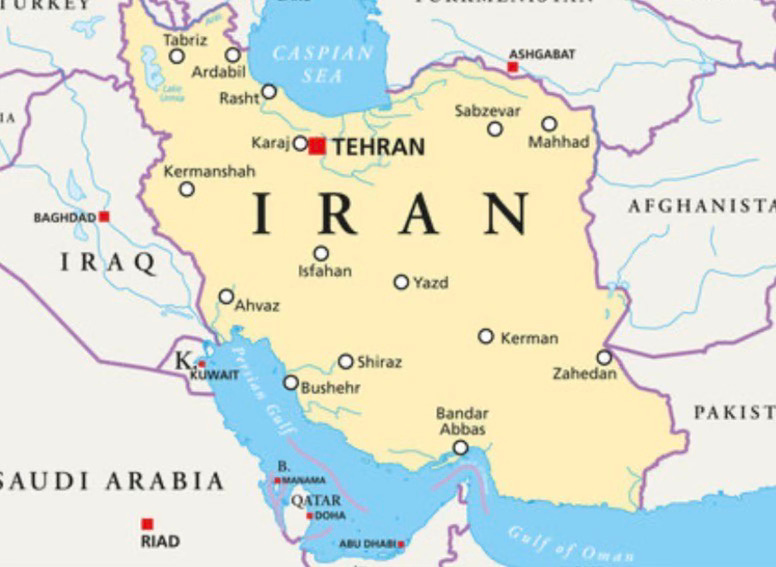
Iran could fire ballistic missiles or drones at American military installations across the Middle East.
Especially in:
Bahrain
Qatar
Iraq
UAE
Iranians have significant missile inventories and a long-range strike capability.
• Targeting U.S. Naval Forces or Shipping
Iran could try to strike U.S. naval vessels in the Persian Gulf or threaten the Strait of Hormuz…a chokepoint for roughly 20% of global oil exports.
Even temporary disruption of Hormuz would spike oil prices and shock markets.
• Proxy and Militia Campaigns
Iran maintains alliances with militia groups across the Middle East (often called the “Axis of Resistance”).
In the event of a U.S. strike, Iran might mobilize those groups to:
Attack U.S. interests in Iraq and Syria
Target Israeli forces
Engage Western assets in Yemen and Lebanon
This approach allows Tehran to retaliate without directly deploying its conventional forces.
🔹 A Wider Regional Escalation
If Iran’s leaders believe they must respond forcefully…the conflict could widen…even without a U.S. ground invasion.
• Energy infrastructure attacks
Iran might target oil facilities…pipelines, and export terminals in the Gulf… disrupting global energy markets.
• Cyberattacks
Iran has developed significant cyber capabilities and could target U.S. infrastructure or financial systems as retaliation.
• Diplomatic and Asymmetric Moves
Iran may opt for global diplomatic pressure…including mobilizing other nations to condemn the U.S….or…leveraging international organizations.
None of these are pleasant scenarios…but they illustrate the range of possible responses.
3. What It Means for Americans at Home and Abroad
A U.S. strike on Iran…even limited…would ripple far beyond Tehran.
🔹 Economic Consequences
Conflict in the Middle East affects energy markets:
Oil prices could surge
Inflation could rise
Supply chains could slow
The Strait of Hormuz is a major artery of global trade; disruptions here would impact gas prices directly in the U.S. and globally.
🔹 Heightened Security Alerts
In the wake of any conflict…U.S. intelligence agencies typically elevate security postures domestically and abroad due to:
Potential terror threats
Retaliation by proxies
Cyber campaigns
That means:
Airports and major infrastructure could see heightened alerts
Security costs could rise
Travel risk assessments could change quickly
🔹 U.S. Military Engagement Abroad
Even a limited strike would likely keep U.S. forces on high alert:
Troop deployments could increase in the Middle East
Aircraft carriers and naval assets may be repositioned
Missile defense systems could be bolstered across allied states
The U.S. presence would expand even without a formal “war” announcement.
🔹 Political Polarization at Home
Any strike would immediately become a major political issue:
Congressional debates over war powers
Public protests and counter-protests
Media battles over justification and consequences
Whether Americans broadly support or oppose the action…it will dominate headlines and political discourse.
Why Diplomacy Still Matters-Even in War
Despite all these risks, experts note that military action and diplomacy can coexist.
For example, Iran’s foreign minister has said Tehran is both “prepared for war” and “ready to negotiate”…a dual posture…that keeps diplomatic channels open…even under threat.
This means the conflict could unfold not as a classic war…but as a cycle of strikes…negotiations…threats…and diplomacy.
That kind of “limited conflict + engaged diplomacy” is dangerous…but…historically not unprecedented.
The Bottom Line: Escalation Is Likely-but Not Inevitable
A U.S. strike would almost certainly provoke an Iranian response.
That response could be:
✔ Missile attacks on U.S. forces or bases
✔ Proxy attacks through allied militia groups
✔ Disruption of energy infrastructure
✔ Cyber and asymmetric retaliation
Any of these would have economic…strategic…and security repercussions for Americans…even those far from the region.
But…there’s still a chance that diplomatic efforts…especially if backed by international pressure…could prevent a full escalation into broader war.
The situation is fluid, complex…and fraught with risk…but not predetermined.
In other words:
A strike would open a new, dangerous chapter…but the next chapter is still unwritten.
And what happens next…will depend not just on military firepower…but on strategy… diplomacy…and choices made in the coming hours and days.
#HoldFast
Back soon,
-Jack
Jack Hopkins
P.S. Most people only understand world-changing decisions after they happen…when the footage is already playing…and the consequences are locked in.
If you value analysis that explains the psychology…and incentives before the move is made…paid subscribers get access to every major piece I publish…including insights I reserve for the inner circle.
History doesn’t send reminders. Subscribing is how you stay ahead of it.


What raised my hackles was 🍊💩 saying yesterday, that they could very well strike, before the negotiations that Iran had already mentioned being prepared to discuss!
With the Kegsbreaths and Millers of the world backing it, 🍊💩 is probably revelling in the chance to kill more people. Maga of course, will cheer it on, boasting of its strength. 🤬
Trump is igniting the rhetoric, like a pyromaniac with gasoline and a match, to simply start a war so he can get his mental adrenaline high of being a king or warlord. What a reality show he is concocting, all while he deflects the public’s attention from ICE crap and Epstein.
#HOLDFAST
