

If This Is a Five-Alarm Fire, Why Are the Hoses Still Rolled Up at the DNC?

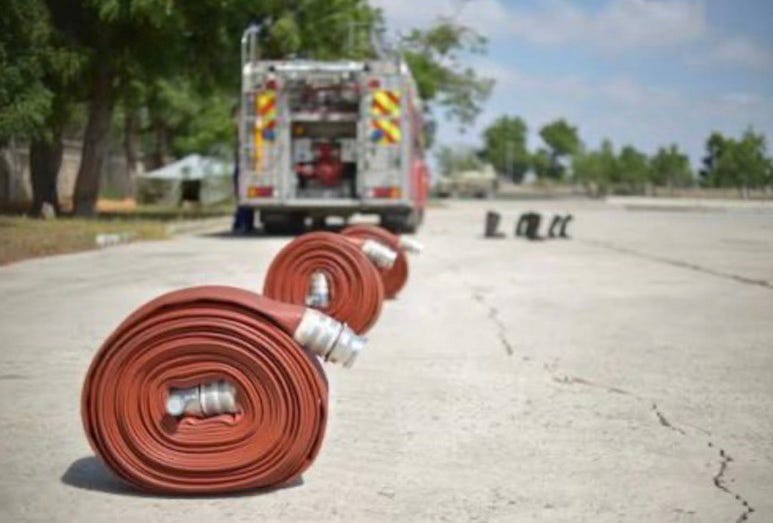
If This Is a Five-Alarm Fire, Why Are the Hoses Still Rolled Up at the DNC?
(Read this in‑app. The structure matters.)
The Jack Hopkins Now Newsletter #762: Wednesday, February 4th. 3:50 am CST
This Is a Credibility Test, Not a Vibes Test
At some point, warnings stop being warnings and start becoming evidence.
For more than a year, Democratic leaders…allied institutions…and aligned media have told the public that the threat to free and fair elections is real…escalating…and unprecedented.
The language has been stark: authoritarian, intimidation, democratic collapse, end of norms.
And…yet…when you look for the operational response…that would logically follow from those claims…the picture is oddly subdued.
That gap matters. Not emotionally. Structurally.
Because when someone tells you the building is on fire….but leaves the hoses coiled… the alarm stops sounding like urgency…and starts sounding like theater.
This article is not about panic. It is about capacity and credibility. The American legal system already contains aggressive…constitutional…well‑tested tools designed for moments when democratic processes face imminent threat.
If those tools are not being deployed at scale…then the reasons offered for restraint deserve to be examined…not politely…but rigorously.
Pause here. If Democratic leadership truly believes democracy is at risk…what concrete actions would you expect to already see? Drop one expectation in the comments before continuing.
The Threat Is Not Subtle-and It Is Not Hypothetical
We are not dealing with stray rhetoric or internet speculation.
We are dealing with a pattern:
Repeated public statements framing elections as something to be controlled
Rhetorical alignment of federal enforcement power with election activity
Open discussion of surveillance, force, or “presence” around voting
Normalization of coercive state behavior as “security” or “order”
You do not need to take every quote literally to understand the signal. Democratic erosion rarely announces itself cleanly.
It advances through chilling effects…ambiguity…and selective enforcement that makes participation feel risky…especially for targeted communities.
The law recognizes this dynamic. That is why voter‑intimidation statutes do not require proof that someone was physically stopped from voting…only that a reasonable person could feel threatened or coerced.
Which makes the next section unavoidable.
The Legal Tools Exist-and They Were Built for Exactly This
There is a persistent myth, often repeated by cautious politicians…that the legal system is powerless until after harm occurs.
That is false.
American law includes emergency brakes, not just post‑mortems. Among them:
Temporary Restraining Orders (TROs) and preliminary injunctions to immediately halt government actions posing imminent constitutional harm
Voting Rights Act §11(b), which prohibits intimidation…threats…or coercion by any actor…including government officials
Administrative Procedure Act challenges that can freeze unlawful agency actions before they metastasize
State Attorney General coalition suits that multiply venues…theories..and pressure
Preservation orders and expedited discovery that force officials to retain communications and justify actions under oath
None of these tools are radical. None are unprecedented. All are used routinely in contexts far less serious than the integrity of national elections.
So…when the public is told that leadership’s “hands are tied,” what that really means is something else:
The tools exist. The will does not appear to match the rhetoric. And that, my friend…is not acceptable.
When Inaction Becomes a Signal
Authoritarian movements do not rely solely on force. They rely on hesitation.
When credible threats are met with caution…instead of counter‑pressure…three predictable things happen:
Deterrence fails: aggressors learn there is no immediate cost
Public confidence erodes: voters sense the mismatch between words and deeds
The burden shifts downward: from institutions to individuals and volunteers
That third point is the quiet tell.
If leadership insists the threat is real…but declines to use the strongest lawful tools available…the implicit message is not reassurance…it is abdication.
And that brings us to the credibility test Democrats keep failing.
If You Truly Believe Democracy Is at Risk, You Behave Differently
You do not wait for Election Day chaos.
You pre‑file cases.
You line up plaintiffs.
You seek injunctions early…even if you might lose.
You force courts…agencies…and the public to confront the threat before ambiguity becomes cover.
You do not rely on fundraising emails…press statements…or the hope that norms will self‑repair.
Which leads to the confrontation Democratic leadership…often tries to avoid.
The Cross‑Examination They Cannot Answer
Read this slowly. Before you read what follows…
…understand what this section is…and what it is not.
This is not a purity test. It is not a demand for theatrical escalation. It is a stress test for leadership credibility…the kind applied when consequences are real and delay carries cost.
Every excuse below has been used…in good faith and bad…to justify restraint in the face of an openly articulated threat to free and fair elections.
Taken individually, some of them sound reasonable. Taken together…they form a system of delay that benefits only one side.
So read this the way a judge would read a cross-examination: not for tone…not for intent…not for political comfort…but for whether each claim actually withstands pressure.
The answers are blunt…because the stakes are. If these defenses fail under scrutiny…then what’s being defended isn’t caution…it’s inaction.
1.
Defense: “We can’t act without standing.”
Answer: Standing is not a surprise obstacle…it’s a solvable one. If you haven’t pre‑identified plaintiffs…jurisdictions and harms…by now, that’s negligence…not prudence.
2.
Defense: “We need concrete evidence before filing.”
Answer: Injunctions exist precisely to stop harm before it fully manifests. Waiting for damage before acting…defeats the purpose of emergency relief.
3.
Defense: “The courts might reject it.”
Answer: Losing a case is not worse than losing an election. That’s bullshit. Risk aversion is not a virtue when democratic legitimacy is on the line.
4.
Defense: “We don’t want to appear partisan.”
Answer: Protecting voting rights is not partisan. Refusing to defend them because you’re afraid of optics…is dereliction.
5.
Defense: “We don’t want to escalate tensions.”
Answer: The other side already escalated. Choosing restraint in the face of coercion doesn’t lower tension…it signals permission.
6.
Defense: “These threats may just be rhetoric.”
Answer: When officials with power make threats…the law treats them as credible risk…not vibes. Pretending otherwise is willful blindness.
7.
Defense: “We’re working behind the scenes.”
Answer: Democracy does not survive on invisible safeguards. If the public can’t see the defense…deterrence fails.
8.
Defense: “We can’t preemptively sue.”
Answer: False. Courts routinely issue declaratory judgments and injunctions against imminent constitutional harm. This is black‑letter law.
9.
Defense: “We don’t control the DOJ.”
Answer: State AGs exist for a reason. Civil litigation does not require DOJ permission.
10.
Defense: “This could backfire politically.”
Answer: If defending free elections is politically dangerous…then politics has already failed…and avoiding action only accelerates that failure.
11.
Defense: “We don’t want to legitimize their narrative.”
Answer: Ignoring coercion doesn’t delegitimize it…it normalizes it.
12.
Defense: “Courts are hostile right now.”
Answer: Hostile courts are exactly why you file early…often…and everywhere…not why you retreat.
13.
Defense: “We don’t want to alarm voters.”
Answer: Voters are already alarmed. What terrifies people is not danger…it’s leadership acting like danger isn’t real.
14.
Defense: “There’s no precedent for this.”
Answer: Authoritarian behavior always outpaces precedent. The law adapts…or democracy collapses…waiting for a perfect analog.
15.
Defense: “We’re focused on winning at the ballot box.”
Answer: You cannot out‑organize voter intimidation with field strategy alone. This is a legal problem…pretending to be a campaign problem.
16.
Defense: “We don’t want to undermine faith in elections.”
Answer: Allowing intimidation undermines faith….far more than confronting it openly.
17.
Defense: “Litigation takes time.”
Answer: Emergency motions exist specifically because time is sometimes a luxury you don’t have.
18.
Defense: “This is unprecedented.”
Answer: Unprecedented threats demand unprecedented urgency…not paralysis.
19.
Defense: “We need to be careful not to overreact.”
Answer: Overreaction is reversible. Under-reaction to authoritarian pressure is not.
20.
Defense: “We’re doing what we can.”
Answer: If this is “all you can do,” then you are admitting the system is incapable of defending itself…and that’s the real crisis.
What Serious Leadership Would Already Be Doing
If Democratic leadership truly believes the warnings it is issuing, the following would not be hypothetical…they would already be underway:
TRO‑ready litigation packages prepared in advance…not drafted reactively
Standing pre‑cleared through identified plaintiffs and jurisdictions
State AG coordination made visible…not implied
Preservation orders queued to prevent evidence destruction
Clear buffer‑zone demands around polling locations
Rapid‑response legal teams…publicly named and funded
Poll‑worker protection plans….communicated clearly and early
Voter intimidation reporting pipelines…stress‑tested before Election Day
None of this requires new law. All of it requires urgency.
A Necessary Clarification Before the Pushback
When people say, “Stop attacking Democrats” or “Just call Republican offices,” they are usually not acting in bad faith. Most are trying to defend unity…reduce panic…and hold onto a version of civic politics that once worked.
That instinct deserves respect.
But…good intentions are not the same thing as strategic clarity.
The exchange below exists…to draw a hard line between moral comfort…and actual leverage…between actions that feel responsible…and actions that reliably change outcomes.
It’s blunt by design, because moments like this…punish politeness and reward accuracy.
Read it not as an attack on allies, but as a correction about how power responds when norms stop doing the work for us.
Q: “Stop attacking Democrats. Go after Republicans.”
A: Criticism follows power. Republicans aren’t persuadable. Democrats control the legal and institutional levers that can actually constrain abuse.
Q: “Write letters. Call Republican offices. They could stop this.”
A: That’s pressure…not leverage. It only works if they still fear shame…norms…or legitimacy. If they don’t…calls are theater.
Q: “You’re dividing the coalition.”
A: Silence isn’t unity…it’s permission. Accountability is how coalitions stay functional under threat.
Q: “But civic engagement matters.”
A: Yes…when it’s aimed where outcomes can change. Mis-aimed engagement burns people out…and leaves power untouched.
Q: “Why be so hard on Democrats?”
A: Because responsibility scales with capacity. If they claim the threat is real…they should be litigating like it.
Q: “Maybe they’re working behind the scenes.”
A: Then show it. Deterrence requires visibility. Invisible defense doesn’t deter intimidation.
Q: “Isn’t this alarmist?”
A: Alarmism is yelling without action. This is the opposite: demanding action because the tools already exist.
Q: “So what should people do instead?”
A: Demand measurable legal friction: injunctions…preservation orders…state AG coordination…and clear rules that raise the cost of intimidation.
The Bottom Line
Every defense offered for restraint rests on the same buried assumption:
That the risk of acting is greater than the risk of not acting.
That assumption cannot coexist with claims of an existential threat to democracy.
Either the danger is real…in which case aggressive legal action is mandatory…or it is being exaggerated for leverage…in which case the public deserves honesty.
There is no third option that preserves credibility.
Democracy does not collapse only because authoritarians push.
It collapses when those who claim to see the danger…decide not to pull the emergency brake.
End with one action:
Comment with the single legal or institutional move you believe should already be happening…and share this with someone who still thinks restraint equals responsibility.
#HoldFast
Back soon.
-Jack
Jack Hopkins
P.S. For those so inclined: don’t just share this with friends who already agree. Share it with Democratic lawmakers, state party leadership…the DNC…and anyone who claims to be taking this threat seriously.
If the danger is real, then the response should be visible…measurable…and immediate. If it isn’t, they should be prepared to explain why.
P.P.S. It’s 10 min before 4:00 am. It’s been a long day. So, I’m off to bed. I’ll reply to your comments later today. Be well!
I would expect to see a serious and public probe into the raid in Georgia and the removal of the original voting records.
If democracy is at risk (it is) why are dems not acting like an opposition party, and using every means available to jam up the works on legislation, executive appointments, insuring party discipline on votes, etc. I could go on all day.