If Iran Can Touch an F-35, Then the Story You’re Being Told About This War Is Already Cracking
The Jack Hopkins Now Newsletter #820: Thursday, March 19th, 2026
There’s a moment in every conflict when the official story…and reality…quietly part ways.
Not with a loud announcement.
Not with a press conference.
But with a single…inconvenient fact that refuses to fit.
This is one of those moments.
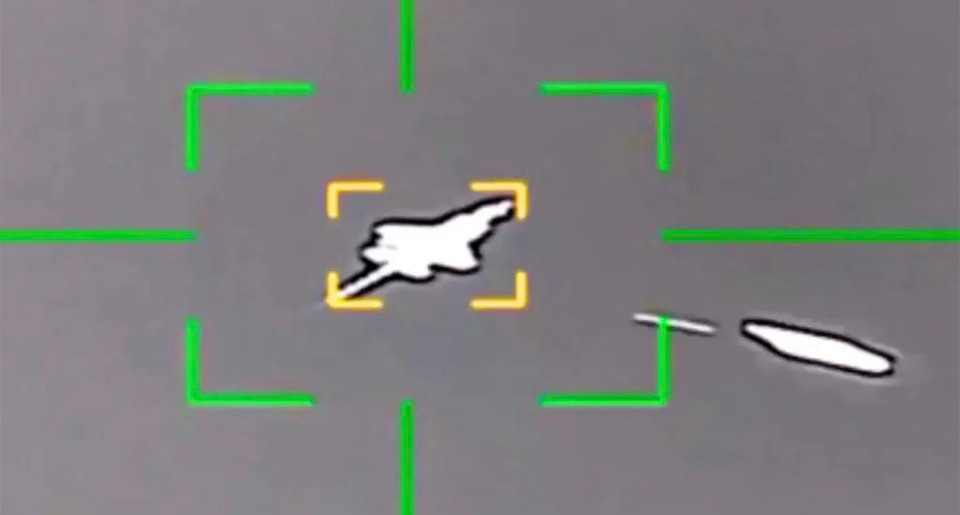
A U.S. F-35…arguably the most advanced fighter aircraft ever built…was struck by what is believed to be Iranian fire while flying a combat mission over Iran.
Let that sink in.
Not a legacy aircraft.
Not a drone.
Not a mistake over friendly territory.
An F-35.
Hit.
And forced into an emergency landing.
Now, if you’ve been listening to the messaging coming out of Washington, you’ve heard something very different.
You’ve heard that Iran’s air defenses have been “flattened.”
You’ve heard that the United States is “winning decisively.”
You’ve heard confidence…certainty…even inevitability.
And yet…
A stealth aircraft designed specifically to avoid detection…
Operating in supposedly degraded enemy airspace…
Was still tracked, targeted, and hit.
That’s not a small contradiction.
That’s a structural problem.
Because the F-35 isn’t just another plane.
It is the plane.
The crown jewel of modern air warfare.
A $100+ million flying system built around one core promise:
You won’t see it. And if you can’t see it, you can’t hit it.
That’s the sales pitch.
That’s the doctrine.
That’s the strategic assumption underpinning U.S. air dominance.
So when an F-35 takes a hit?
You’re no longer talking about a battlefield incident.
You’re talking about a crack in the foundation.
Now, let’s be precise.
We don’t yet know exactly how the aircraft was hit.
We don’t know if it was radar-guided, infrared, or some hybrid system.
We don’t know whether it was luck, adaptation, or something more concerning.
But we do know this:
Iran’s defenses were supposed to be degraded to the point of irrelevance.
And yet…
They reached out and touched the most advanced aircraft in the sky.
That tells you something important.
It tells you that “flattened” doesn’t mean what you think it means.
It tells you that capability still exists…whether in pockets…mobile systems…or networks we haven’t fully mapped.
And…it tells you that the battlefield is more contested than the messaging suggests.
Here’s where it gets even more interesting.
This wasn’t an isolated data point in a vacuum.
Zoom out for a second.
Three U.S. F-15s shot down…by friendly fire.
A KC-135 refueling aircraft lost…with all crew members killed.
Now an F-35 struck inside Iranian airspace.
Individually, each event can be explained away.
Fog of war.
Tragic mistakes.
Unclear causes.
But collectively?
They start to form a pattern.
And patterns…are what matter.
Because war isn’t judged by press releases.
It’s judged by friction.
And friction is everywhere in this picture.
Friendly fire incidents suggest coordination problems.
Aircraft losses suggest operational strain.
And…now, a direct hit on a stealth platform suggests that the enemy still has teeth.
So when officials say we are “winning decisively,” you have to ask:
Winning…by what metric?
Because if air superiority were truly uncontested…
If defenses were truly “flattened”…
If the operational environment were truly controlled…
Then an F-35 should not be limping home after taking fire.
This is where the narrative starts to matter more than the event itself.
Because wars are fought on two levels:
The battlefield…
And the story about the battlefield.
And…right now, those two are drifting apart.
The story says dominance.
The event says vulnerability.
The story says control.
The event says contest.
The story says inevitability.
The event says uncertainty.
Uncertainty is the one thing leaders try hardest to suppress in public.
Not because it doesn’t exist.
But…because once people see it…
They start asking different questions.
Harder questions.
Questions like:
If Iran can still hit an F-35…what else can they hit?
If their defenses are “flattened”…why are they still operational?
And…if this is what “winning” looks like…what does escalation look like?
Now, none of this means the United States is losing.
That’s not the point.
The point is something more subtle…and more important.
The gap between perception and reality is widening.
And that gap…is where miscalculations live.
Because when leadership believes its own simplified narrative…
It takes bigger risks.
It pushes further.
It assumes the enemy is weaker than they are.
And…history is very clear on what happens next.
This F-35 incident is not just a battlefield story.
It’s a signal.
A signal that the war is more contested than advertised.
A signal that the enemy retains capability.
A signal that “decisive” victories often look very different up close.
And once you see that…
You can’t unsee it.
Because the most dangerous moment in any conflict…
Is when one side thinks the fight is already won.
While the other side…is still very much fighting.
#HoldFast
Back soon.
-Jack
Jack Hopkins
P.S. The most valuable thing in a moment like this isn’t outrage…it’s clarity.
Because once you understand how narratives get constructed…how “winning” gets defined… and how signals like this get quietly minimized…you start to see the war as it actually is, not as it’s being presented. That edge…the ability to spot the gap early…is what separates people who are informed…from people who are being managed.


Great post, Jack.
There's a history lesson hiding in plain sight here. In 1941, Claire Chennault watched Allied fighters get slaughtered over Burma because they fought the Zero in dogfights where Japanese pilots were unbeatable. The RAF sent Buffaloes, then Hurricanes, then Spitfires. Same result each time. The institutional assumption was that Japanese aviation was imitative and inferior. The Zero kept proving otherwise and the brass kept explaining each loss away individually. It had no armor, but was so maneuverable they couldn't touch it. What's more, the early Japanese pilot training (as documented in Saburo Sakai's autobiography Samurai) was so intense that fewer than one in three hundred cadets made the cut.
Chennault was an insubordinate, hard-headed man like his hero Billy Mitchell. He refused to let doctrine overwrite what the data was telling him. He studied the Zero obsessively, admitted the P-40 couldn't climb with it, couldn't turn with it, couldn't match its ceiling so he built his entire tactical system around those hard truths.
Dive-and-zoom attacks. Never slow down. Never fight on the enemy's terms. His pilots also benefited from a vast early warning network of spotters across Yunnan province, which gave them altitude and position before any engagement. The Japanese could never figure out how the Flying Tigers always knew they were coming.
This F-35 story has the same smell. "Flattened" defenses that apparently still had enough distributed, survivable capability to track and engage the most sophisticated stealth aircraft ever built? The official narrative keeps saying dominance; the signal traffic keeps saying contest.
Remember too that Iran doesn't need to "win." It already replaced the leadership killed in the early strikes. It will continue to suppress reform. They literally have the west by the balls because the Strait of Hormuz isn't just about oil, it's also the pipeline for rare earth metals, fertilizer, and a million other things vital for technology.
The most dangerous assumption in any air campaign is that the enemy's capability matches what your targeting runs told you it was. Iran, like Chennault's spotters, may retain exactly the kind of networked, mobile, low-signature capacity that the strike packages weren't designed to find. Each incident gets explained away but you can't explain a pattern. War has changed, and continues to change.
Remember too that North Korea was entirely destroyed in three years by LeMay's intensive firebombing campaign that burned 95% of all buildings, dams, railroads, power stations, and roadways into black ash. They never surrendered, and in fact hardened into the isolated prison state we see today.
There is no endgame. No strategy of any kind. Hegseth is an imbecile and Trump's frontal cortex has been shrunk small as a golf ball by dementia. AIPAC will spend billions to make sure their candidates on both sides of the aisle will elections, and there's always the backup plan of using nukes to end elections altogether.
It will only ge worse.
I think you're right. My ears perked up the minute I learned of it previously.
