

How Epstein’s Lawyer Became the Gatekeeper to $600 Million—and the Truth

How Epstein’s Lawyer Became the Gatekeeper to $600 Million—and the Truth
The Man Who Held the Keys
The Jack Hopkins Now Newsletter #821: Friday, March 20th, 2026
Let me start with something many people don’t realize.
When Jeffrey Epstein died…
The system didn’t collapse.
It didn’t scatter.
It didn’t disappear.
It…transferred.
Quietly.
Deliberately.
Almost seamlessly.
And at the center of that transfer…
was a man most people had never heard of.
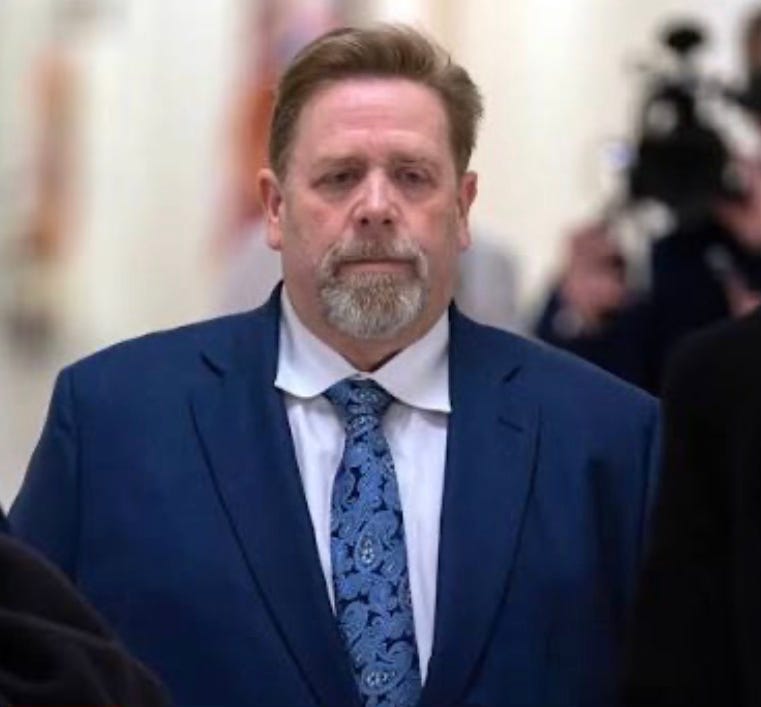
Darren Indyke.
The Person Who Was Always There
If you’re trying to understand how Epstein operated for as long as he did…
…you don’t start with the headlines.
You start with the infrastructure.
And…Indyke wasn’t on the periphery of that infrastructure.
He was the infrastructure.
He met Epstein in the 1980s…before the private jets…before the headlines…before the public understood anything about what was happening.
This wasn’t a late-stage hire.
This wasn’t damage control.
This was early.
Foundational.
Over time, Indyke became more than just Epstein’s lawyer.
He became:
His legal strategist
His financial architect
His trust manager
His corporate operator
The person who didn’t just respond to problems…
…but helped design the system that made those problems harder to see.
What That Actually Means
When people hear “lawyer,” they tend to imagine courtrooms and contracts.
That’s not what this was.
Indyke’s role sat in a different category entirely.
He was embedded in:
Shell companies
Trust structures
Financial flows
Property transactions
Internal operations
He wasn’t just handling legal issues.
He was helping shape the environment those issues lived inside.
And that distinction matters.
Because when something operates for years…decades…without meaningful interruption…
…it’s almost never just because of one person.
It’s because of a system.
A system that:
Absorbs pressure
Aedirects scrutiny
Isolates liability
Maintains continuity
Indyke was part of that system.
Deep inside it.
The Question That Keeps Coming Back
After Epstein’s 2008 conviction…
…a lot of people walked away.
Or at least…they say they did.
Indyke didn’t.
He stayed.
He continued working with Epstein.
Continued structuring.
Continued managing.
And when asked about that later…
…his explanation was simple:
He believed Epstein.
Believed the behavior had stopped.
Believed the situation had changed.
That explanation has been repeated.
Under oath.
Publicly.
Consistently.
And yet…
…it’s also the point where a lot of people pause.
Because it raises a question that doesn’t go away:
What does someone in that position actually see?
Proximity Is Not Neutral
This is where people tend to oversimplify.
They want clean categories:
Guilty
Innocent
Involved
Unaware
But…real systems…don’t work like that.
Especially ones built to obscure themselves.
Indyke was not a casual observer.
He was:
Managing structures
Overseeing transactions
Embedded in communication
Present across decades
That level of proximity isn’t neutral.
It doesn’t automatically equal criminal liability.
But it does raise the threshold of belief required for “I didn’t know.”
And that’s where the tension lives.
Then Epstein Died
And here’s where the story shifts.
Because most people assume that Epstein’s death marked the end of his network.
It didn’t.
It marked a transition.
Because when Epstein died…
…his estate…hundreds of millions of dollars…
…didn’t go to the public.
Didn’t go to the courts.
Didn’t go to some neutral third party.
It went to two men.
One of them…
…was Darren Indyke.
The Executor Problem
Think about what that means.
The man who had spent decades inside Epstein’s system…
…became one of the people responsible for:
Managing his assets
Controlling financial distributions
Overseeing settlements
Determining how claims were handled
Controlling access to records
That’s not a small role.
That’s not administrative.
That’s power.
And not just financial power.
Informational power.
Because in a case like this…
…money and information are inseparable.
Who Controls the Records…Controls the Narrative
Here’s a pattern you’ll start to recognize if you look closely enough:
After major events…
…control doesn’t disappear.
It consolidates.
The question becomes:
Who decides what gets seen?
What gets released?
What gets settled?
What gets buried under legal process?
In this case…
…those decisions flowed through the estate.
And Indyke…was at the center of it.
The Criticism
This didn’t go unnoticed.
Victims’ attorneys.
Legal analysts.
Investigators.
Many of them raised the same concern:
How does someone so deeply embedded in Epstein’s world…
…end up controlling what happens after Epstein is gone?
Some described it as:
A structural conflict.
Others were more blunt.
But the core issue was the same:
Can a system investigate itself?
The Money
At its peak, Epstein’s estate was estimated around $600 million.
Since then, large portions have been distributed:
Settlements
Compensation programs
Legal costs
Over $170 million has gone to victims through structured programs.
That matters.
But…it’s not the whole story.
Because the process of how that money moves…
who qualifies…
…what conditions apply…
…what claims are accepted or limited…
Those decisions shape outcomes.
And…those decisions…don’t happen in a vacuum.
The Legal Line
Now, let’s be precise.
Darren Indyke has not been criminally charged.
He has denied wrongdoing.
He has stated, clearly…that he had no knowledge of Epstein’s crimes.
That is the official position.
And it matters.
Because there’s a difference between:
Legal liability
Structural involvement
But just because something hasn’t crossed the legal threshold…
…doesn’t mean it doesn’t deserve scrutiny.
Especially when the system itself…is what’s under examination.
Congress Starts Asking Questions
Fast forward.
The story doesn’t end in 2019.
It continues.
Indyke was subpoenaed.
Testified.
Answered questions under oath.
And…again, the central claim remained:
He didn’t know.
He trusted Epstein.
He regrets that trust.
That’s the line.
And again…
…for some people, that closes the loop.
For others…like myself…
…it opens a much bigger one.
This Isn’t About One Man
It’s tempting to reduce this to a single figure.
To say:
“He knew”
“He didn’t know”
“He’s responsible”
“He’s not”
But…that misses the point.
Because what this really exposes…
…is something broader.
How systems like this function.
How they sustain themselves.
How they transition after disruption.
And…how the same people who helped build them…
can end up managing their aftermath.
The Pattern
Look at it structurally:
Long-term insider
Deep financial and legal integration
Continued involvement after known misconduct
Post-event control over assets and information
Ongoing influence over outcomes
That’s not random.
That’s a pattern.
And once you see it…
…you start to see it elsewhere.
Different names.
Same structure.
Why This Matters Now
Because most people think in events.
Something happens.
It ends.
We move on.
But…power doesn’t operate in events.
It operates in continuity.
In systems.
In relationships that don’t dissolve…when the headlines fade.
Darren Indyke represents continuity.
From the early days…
…to the height of Epstein’s operation…
…to the aftermath.
That’s rare.
And it’s revealing.
The Real Question
So the question isn’t just:
“What did he know?”
The deeper question is:
How do systems like this sustain themselves for so long…
and who ensures they continue functioning…even after collapse?
Because if you can answer that…
…you’re no longer looking at isolated cases.
You’re looking at a model.
Where That Leaves Us
We’re not at a clean resolution here.
There’s no neat ending.
No definitive closing argument.
Just a set of facts.
A set of roles.
A structure that held…
and then transferred.
And a man who was there…through all of it.
And That’s the Part Most People Miss
The headlines focus on the visible.
The extreme.
The shocking.
But the real story is usually quieter.
It lives in:
Who built the system
Who maintained it
Who inherited it
And…who still controls what comes out of it
That’s where the signal is.
That’s where the leverage is.
And that’s…where you start to understand what you’re actually looking at.
What I’ve laid out here is the visible structure.
But there’s another layer most people haven’t looked at closely:
The specific entities Indyke controlled
The financial pathways that continued after 2008
And…the quiet legal mechanisms that shaped what investigators…and the public…could actually access
I’m breaking that down in detail for paid subscribers later this evening.
Final Thought
If you’re trying to make sense of this…
…don’t just look at what happened.
Look at what persisted.
Because what persists…
…tells you what matters.
#HoldFast
Back soon
-Jack
Jack Hopkins
P.S. Most people consume headlines and feel informed.
A much smaller group learns to recognize the structures behind them.
That difference…
…is where the advantage is.
All of what you wrote about is a stunning & astute synopsis of the Epstien Empire. Alas, the more that is revealed, even in small parts helps to create the missing pieces to the Conglomerate of perversion that Epstien created.
Thanks, Jack. All excellent points. I appreciate you directing our eyes away from the lurid headlines and back to the plumbing: the trusts, the estate, the executor, and the continuity.
For me, the most chilling detail isn’t just what Darren Indyke might have known; it’s that the man who helped build and maintain Epstein’s machinery was then put in charge of stewarding the money and the records after Epstein’s death.
The horror isn’t just that Jeffrey Epstein was a prolific predator; it’s that he functioned like a spider at the center of a dense, deliberately engineered web whose whole purpose was to ensnare powerful men and turn their secrets into leverage.
Epstein’s operation only makes sense if you see it as a system of capture and control, not a lone monster with some rich friends. The pattern that keeps surfacing is the grooming of wealthy, arrogant men into compromising situations, then embedding those encounters inside a maze of shell companies, trusts, and intermediaries that convert shame into obedience. Once you accept that, it’s hard not to see his “network” as a pressure device that could be turned in whatever direction his real backers found useful.
The names of these ultimate handlers are still conspicuously absent: Transnational oligarchs who move more easily across borders than most governments, authoritarian regimes that treat human beings as disposable inputs, and eugenicist billionaires who talk about “improving” humanity while treating entire populations as lab material. Whether their passports are Russian, American, Gulf, or something else almost doesn’t matter—the through-line is a class of people who regard democracies as soft obstacles to be managed, not communities to be accountable to. It's Dr. Strangelove's war room for real.
This is all by design. Systems like this are built to absorb shocks, redirect scrutiny, and ensure that when a node blows up, the data and the leverage don’t. The same hands that wired the structure are then trusted to “wind it down,” which in practice means deciding what victims see, what investigators can reach, and what the public is never allowed to know. In that sense, the estate isn’t the end of the network, it’s its chrysalis.
What we’re living through now feels like the political downstream of that same architecture. Once you accumulate kompromat on enough decision-makers, you don’t have to be competent at governance; you just have to be ruthless about enforcement and short-term power retention. The result looks exactly like the government we have: a hollowed-out, performative state fronted by loyal incompetents whose real job is to protect the network, not the country.
The “button-down bomb” went off when the Epstein story finally breached mass consciousness, but the response from the system wasn’t reckoning—it was containment. Rather than risk a real accounting that could expose who was pulling the strings, we’ve watched norm after norm get torched, institutions delegitimized on purpose, and public trust eroded to the point where any revelation can be waved away as just another conspiracy. In that environment, the safest place for a captured state to hide is in plain sight: chaos, noise, and a permanent fog of “everybody’s corrupt anyway.”
We’ve been here, in a different key, before. In the 1850s American South, a small planter aristocracy quietly captured state and federal machinery to protect an economy built on human bondage. They packed courts, wrote gag rules, and treated any challenge to slavery as an attack on “order,” even as they dismantled the republic’s credibility to keep their system intact. Ordinary white Southerners were told that their dignity and safety depended on defending this order, even as it marched them toward a war that would shatter their world.
If there’s any hope in this, it’s that every time someone like you or Aaron Parnas maps another piece of the web it slightly reduces the distance between what victims know, what investigators suspect, and what the public is willing to believe. That’s also why the pushback is so ferocious: for a certain class of people, sunlight isn’t just embarrassing—it’s existential. They know they live on borrowed time. The money they hoard is stolen from us.
To be honest, I don't see a peaceful end to this. These people routinely use the supreme argument of violence (an argument from which there is no escalation except worse violence) as their primary means of getting their way. They might not be dislodged by anything less.