He Was Epstein's Associate; He Was Ready to Talk — And Now He’s Dead
He Considered Cooperation in 2016. Years Later, He Died in a Paris Cell. What Happened in Between?
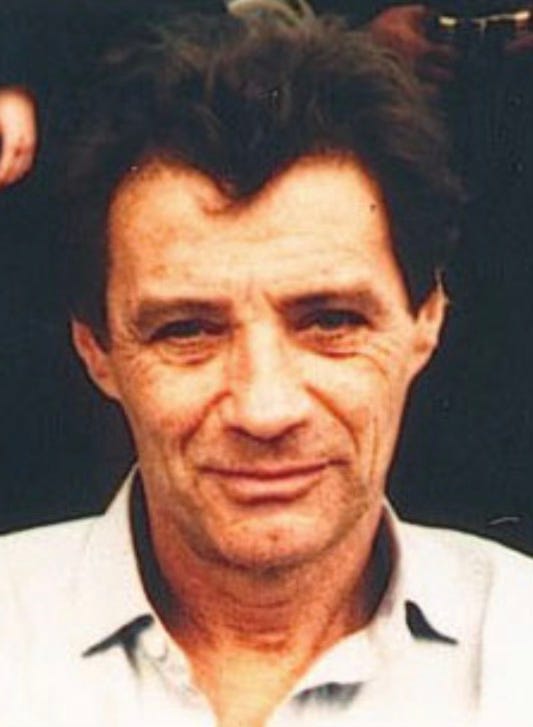
Epstein’s longtime associate, Jean-Luc Brunel.
He Was Epstein’s Associate; He Was Ready to Talk — And Now He’s Dead
He Considered Cooperation in 2016. Years Later, He Died in a Paris Cell. What Happened in Between?
The Jack Hopkins Now Newsletter #792: Monday, February 23rd, 2026.
There is a moment in every major criminal investigation when someone on the inside blinks.
They call a lawyer.
They ask about “options.”
They test the temperature of the water.
In late February 2016, Jean-Luc Brunel…longtime associate of Jeffrey Epstein and founder of a modeling agency repeatedly named in civil allegations…appears to have reached that moment.
According to federal notes later described in reporting on DOJ-released materials, Brunel was “wanting to cooperate” and “afraid of being prosecuted.”
That phrase is not dramatic.
It is procedural.
But…in federal investigations…procedural language is where revolutions begin.
And…then, almost as quickly as the possibility emerged…it vanished.
He never testified in the United States.
No proffer transcript surfaced.
No cooperation agreement became public.
No sealed docket leaked.
Instead, Brunel would be arrested years later in France and found dead in a Paris jail cell in 2022 before ever answering questions in an American courtroom.
Between “wanting to cooperate” and dying in a foreign prison is a story that has been flattened into rumor.
It deserves reconstruction.
The February 29, 2016 Notes
The federal notes referenced in reporting are handwritten and sparse.
They reportedly capture two essential points:
• Brunel wanted to cooperate
• Brunel feared prosecution
In federal practice, that combination usually signals an exploratory contact…not a signed deal.
When someone in Brunel’s position reaches out, one of three things is typically happening:
He believes an indictment may be imminent.
He believes another insider may flip first.
He believes cooperation is the only way to control the damage.
In 2016, Epstein had not yet been re-arrested. The national focus on his network had quieted after his controversial Florida plea deal years earlier.
Which makes this more intriguing.
Why, in early 2016, would Brunel suddenly want to cooperate?
Something was moving.
And he knew it.
What Cooperation Would Actually Require
The public hears “immunity” and imagines a handshake agreement.
Federal cooperation is far more structured.
There are typically stages:
1. Proffer (“Queen for a Day”)
A limited meeting where a potential cooperator speaks under certain protections. Statements can’t be used directly against him…unless he lies.
2. Reverse Proffer
Prosecutors present evidence to the potential witness to persuade him cooperation is in his interest.
3. Formal Cooperation Agreement
Signed. Narrow. Conditional. Requires full disclosure and often testimony.
4. Immunity
Rarely broad. Usually transactional and formalized.
If Brunel was “wanting to cooperate,” that suggests at least preliminary contact.
Which means there should be something:
Calendar entries.
Internal AUSA notes.
An FBI FD-302 summary.
An email setting up a meeting.
A draft proffer letter.
Cooperation does not materialize from thin air.
And…yet…no such documents have been publicly produced beyond the brief handwritten note reference.
Which raises the first structural question:
Was this exploration killed quickly?
Or…did it advance further than we’ve been shown?
The May 2016 Email
Two months later, Jeffrey Epstein himself sent an email to attorney Kathryn Ruemmler referencing Brunel and claiming he had heard that “Boies got Jean Luc full immunity” and was taking him to a U.S. Attorney’s Office.
The email, as reported in coverage of document releases, is chaotic and urgent. It also references “3 million dollars” in proximity to Brunel and cooperation.
Important: this email is Epstein relaying what he says someone told him.
That makes it hearsay inside an email.
But it reveals something crucial:
Epstein believed Brunel might flip.
And Epstein believed immunity was being discussed.
That belief alone is explosive.
Because powerful defendants…do not panic over casual rumors.
They panic…when leverage shifts.
The Three Million Dollar Detail
Money rarely enters the record accidentally.
In the May 2016 email, Epstein references “3 million dollars” in connection with Brunel and the cooperation situation.
The phrasing is messy. The context is unclear.
What could that number represent?
Possibilities include:
• A demand to facilitate testimony
• A payoff to prevent testimony
• Legal expenses
• A settlement offer
• A misdirection
The documents do not clarify.
But…the existence of the number suggests the cooperation discussion was not merely theoretical.
It had stakes.
High stakes.
In federal cases, cooperation is leverage. Leverage has value.
Value often becomes transactional.
Whether that transaction was real…proposed…rejected…or fictionalized by Epstein remains unresolved.
But it sits there in writing.
Three million dollars.
A number without a conclusion.
The France Problem
This is where most commentary collapses into conspiracy shorthand.
The more realistic complication is jurisdiction.
Jean-Luc Brunel was French.
French law is not American law.
If Brunel cooperated with U.S. authorities in 2016…any protection granted would apply within U.S. jurisdiction.
It would not bind French prosecutors.
France maintains its own criminal code and extradition framework.
French citizens are not casually surrendered.
And by 2020, French authorities would arrest Brunel on sex trafficking-related charges.
If Brunel understood, in 2016, that cooperation in the U.S. could expose him to French prosecution without protecting him there…cooperation becomes strategically dangerous.
Flip in America.
Face prison in Paris.
From a self-preservation standpoint…silence becomes rational.
There is no public evidence that U.S. and French authorities negotiated cross-border immunity protections for Brunel in 2016.
Without that…his leverage was limited.
What Should Exist — But Hasn’t Surfaced
If Brunel engaged in meaningful cooperation talks, the following should exist somewhere:
• Proffer scheduling emails
• Memoranda documenting initial outreach
• Internal DOJ discussions evaluating his credibility
• FBI contact reports
• Communications between U.S. and French counterparts
Even if redacted.
Even if partially withheld.
Even if summarized.
The absence of such documentation in public releases does not prove concealment.
But it leaves a conspicuous gap.
And investigative gaps are oxygen for suspicion.
A More Plausible Collapse Scenario
Strip away theatrical conspiracy.
Imagine instead:
Brunel’s counsel tests the waters in early 2016.
A prosecutor listens.
Brunel demands broad immunity.
Prosecutors hesitate or refuse.
Brunel realizes French exposure remains.
Epstein hears about the outreach.
Pressure increases.
Brunel recalculates.
Silence.
That scenario requires no secret cabal.
Just lawyers…risk…and jurisdictional limits.
And yet…it still leaves critical questions:
How did Epstein learn about the cooperation discussion?
How far did talks advance before collapsing?
Was the “3 million” real, or bluster?
Did French authorities signal anything that influenced the decision?
Those are factual questions.
They deserve answers grounded in records, not rhetoric.
The 2019 Reset
When Epstein was arrested again in 2019, the landscape changed dramatically.
At that point, if Brunel had information…his leverage was stronger.
Yet…still, he did not appear in U.S. proceedings.
Instead, he was arrested in France in 2020.
Then in February 2022…he was found dead in his cell at La Santé prison.
French authorities ruled it a suicide.
Another door closed.
No cross-examination.
No federal testimony.
No sealed cooperation transcript to unseal.
Whatever he knew remains locked in paper fragments.
The Structural Pattern
High-profile networks often depend not on dramatic cover-ups but on fragmentation.
Different countries.
Different prosecutors.
Different statutes of limitations.
Different political appetites.
When jurisdiction splinters…accountability fragments.
A potential cooperator can calculate that no single authority holds all the cards.
And…when no authority holds all the cards…cooperation becomes less attractive.
This is not a Hollywood thriller.
It is a coordination problem.
The Uncomfortable Middle
There are two extremes that dominate public conversation:
Brunel was fully silenced by dark forces.
Nothing happened; it was meaningless noise.
Reality likely sits between them.
He appears to have explored cooperation.
That exploration appears to have alarmed Epstein.
Money was referenced.
Jurisdiction complicated protection.
Talks ended.
He never testified.
Those are facts as far as the public record allows.
What remains unknown is whether the collapse was:
• A failed negotiation
• A jurisdictional dead end
• A pressure campaign
• Or simple self-interest
The tragedy is not merely that he died.
It is that the moment in 2016…when fear and leverage intersected…was never fully documented for the public.
The Questions That Still Matter
If DOJ truly wants to extinguish speculation, it could clarify:
• Was a proffer meeting scheduled in 2016?
• Was immunity ever formally offered?
• Did French authorities object to U.S. protection discussions?
• Was there any investigation into the “3 million” reference?
• How did Epstein learn about Brunel’s exploratory contact?
These are not theatrical questions.
They are procedural.
And procedural clarity kills rumor.
Why This Still Matters
Because 2016 was the last moment when Brunel could have spoken under American jurisdiction without the complications of a later arrest.
If cooperation collapsed due to legal realities…say so.
If it collapsed due to credibility issues…document that.
If it collapsed because he demanded something prosecutors would not give…explain it.
But…until the record is complete, the gap between “wanting to cooperate” and permanent silence…will remain one of the most consequential unfinished threads in the Epstein saga.
Not because it proves a grand design.
But because it represents the moment…the story could have widened.
And…didn’t.
The man who almost talked.
“Almost” is doing a lot of work here.
And…until the paperwork catches up with the whispers, that “almost” will remain louder than any testimony he never gave.
Now that we’ve been disciplined.
Now that we’ve stayed inside the lines of what the documents actually show. Now that we’ve separated what’s written from what’s assumed…
Let’s talk about what this could have meant.
If Jean-Luc Brunel was genuinely exploring cooperation in early 2016, that suggests something destabilizing was already moving beneath the surface of the Epstein network years before the 2019 arrest.
People don’t “want to cooperate” casually. They do it when they believe exposure is imminent…or when they believe someone else is about to flip first.
If Epstein’s email referencing “full immunity” and a multi-million-dollar figure reflected real panic…even if distorted…it suggests he believed leverage was shifting. And…when leverage shifts in a network built on secrecy…the entire structure trembles.
If France complicated the equation, then the real story isn’t cinematic sabotage…it’s fragmentation.
Jurisdiction split the battlefield. Protection in one country didn’t guarantee safety in another. A potential witness facing two legal systems…may have concluded silence was safer than cooperation.
But here’s the part that lingers.
If cooperation had gone forward in 2016…testimony would have predated the 2019 arrest. Investigative momentum could have accelerated. Names might have surfaced sooner. Pressure might have redistributed earlier.
That’s not an accusation.
It’s a counterfactual.
The moment Brunel almost talked may have been an inflection point. Instead…it became a closed loop.
And…now…he’s dead.
Which means whatever that 2016 window might have revealed will never be tested under oath.
Sometimes the loudest thing in an investigation isn’t what was said.
It’s what almost was.
#HoldFast
Back soon.
-Jack
Jack Hopkins
P.S. The part I’m not letting go of is the thin strip of time between “he wanted to cooperate” and silence…because that’s where leverage lives.
If you spot a document, email, or bates-numbered page that tightens that window (a meeting date, a proffer reference, anything), drop it in the comments. I’ll fold it into the next pass and keep pulling the thread until it either snaps… or it finally gives.
Sources / Further Reading
DOJ Epstein Library Search (note on handwritten-search limitations)
WSJ: “The Accomplice Who Was Going to Testify Against Jeffrey Epstein—Then Went Dark”
Yahoo: summary w/ excerpts of the prosecutor note + May 2016 email language
Ars Technica: DOJ release included unredacted nude photos + victims’ names
Financial Times: Goldman CEO on accepting Ruemmler’s resignation
ABC News: Brunel found dead in La Santé prison (Feb 19, 2022)
Vanity Fair: Brunel found dead in prison (context + background)
DOJ-hosted court record PDF (Giuffre v. Maxwell docket exhibit; Boies/Edwards appear)
EpsteinData.org Document Explorer (searchable court-release archive)
JMail.world drive (large searchable archive of DOJ/court/oversight releases)


Do you think we'll ever get to the bottom of the Trump/Epstein Files 🤔⁉️I don't, but what a indepth back story you've written here, Excellent Job 🎯 and will reStack ASAP 💯👍
Brilliant Jack. Keep pulling the thread.